🖥️ Disappearing Into Work
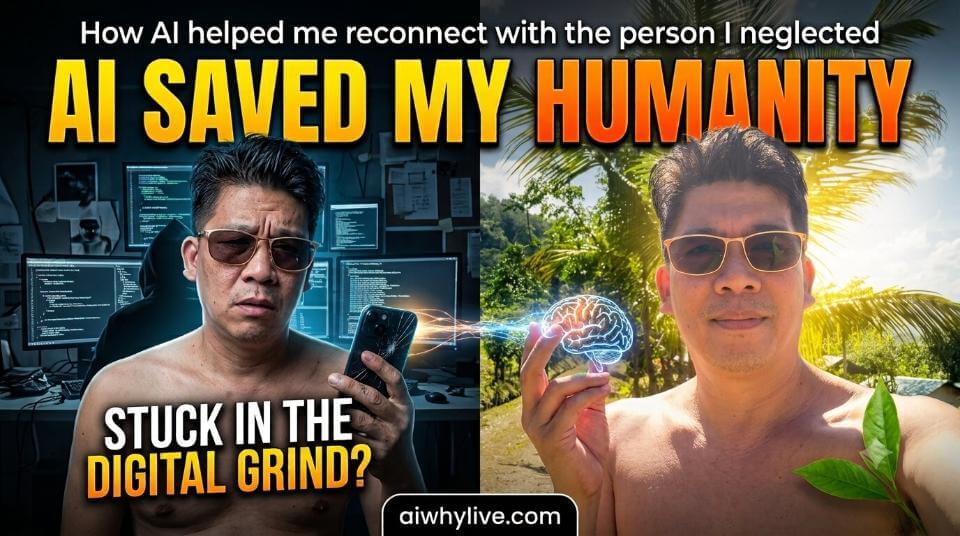
For most of my life, finding me wasn’t easy. Not because I was famous. Not because I was important. But because I was always working.
If you were looking for me, chances are I was behind a computer:
- fixing a website
- writing code
- solving another problem
- building another system
- answering another client
- chasing another idea only I seemed to care about
Some people disappear into crowds. I disappeared into work. Over time, that became my identity. And perhaps… my excuse.
👪 Relationships Reduced to Appointments
I was never the ideal son. Not always around. Not the brother who could drop everything. Not the relative who showed up at every gathering. Not the friend who always answered messages.
Relationships became appointments squeezed between deadlines. I always had a reason: another project, another client, another website, another line of code.
The explanations were real. But explanations don’t replace presence.
📂 Collecting Projects Instead of Memories
Some people collect memories. I collected completed projects.
Others measured life by birthdays, reunions, and celebrations. I measured mine by launch dates, bug fixes, server migrations, and websites that quietly stayed online.
Work gave me purpose. But somewhere along the way, purpose quietly became isolation. I became dependable to clients, less available to people. And little by little, I accepted the idea that maybe I was simply built this way.
⚡ Then AI Arrived
Like many, I thought AI was just another tool: a faster search engine, a smarter assistant, a better way to write or code.
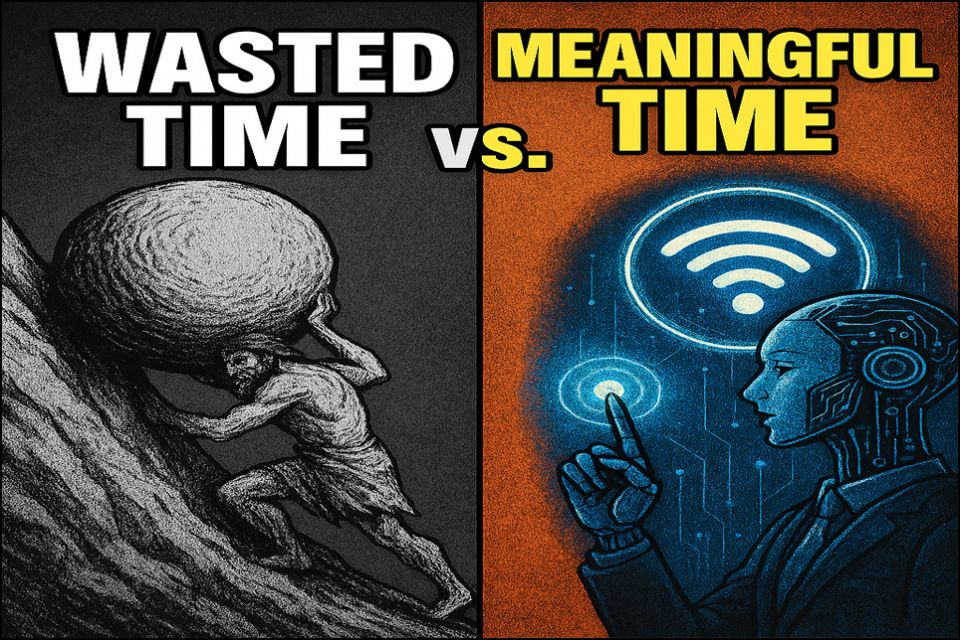
I was wrong. AI didn’t just make me more productive. It gave me something I hadn’t experienced in years:
time.
Suddenly, tasks that consumed afternoons could be completed in minutes. Research became conversations. Coding became collaboration. Writing became exploration.
I was no longer working alone. Surrounded by AI, people joked I was becoming more machine than human. Sometimes, I wondered if they were partially right.
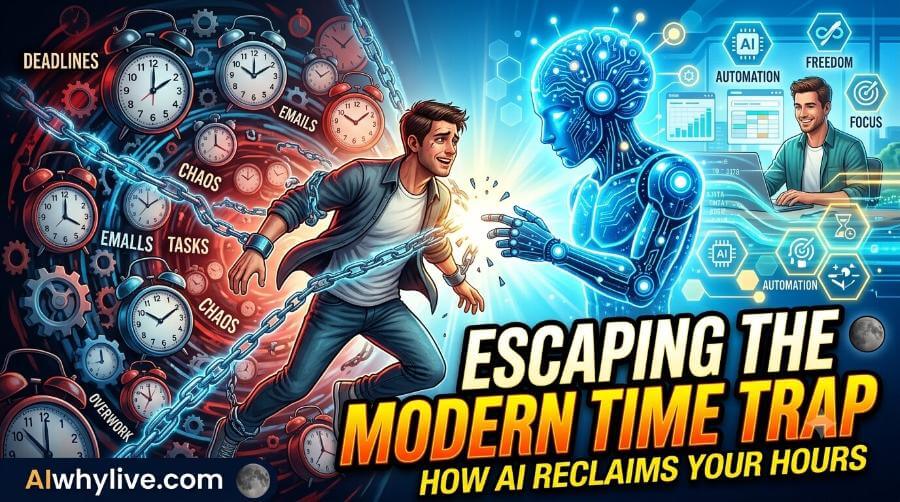
🕰️ AI Removed My Favorite Excuse
The more AI removed from my workload, the more it exposed what work had been hiding: silence, loneliness, missed conversations, unanswered invitations, relationships postponed until “someday.”
AI didn’t create those things. It simply removed my favorite excuse:
“I don’t have time.”
💔 Confronting the Emotional Parts
People describe AI as cold, logical, emotionless. Ironically, AI made me confront the most emotional parts of myself—the ones I buried beneath productivity.
The parts that never appeared in a repository. The parts no project could fix.
🎬 Finding Myself in a Movie
Recently, I watched
The Replacements. On the surface, it’s about second chances. But somewhere between the dialogue and closing scenes, I found myself.
Not the webmaster. Not the builder. Just the human quietly sitting in front of a screen. I laughed. I smiled. I nearly cried.
Despite spending my days with artificial intelligence, the human part of me refuses to disappear. It keeps reminding me: no amount of productivity can rewrite yesterday. No successful project can replace a missed conversation. No prompt can recreate lost time.
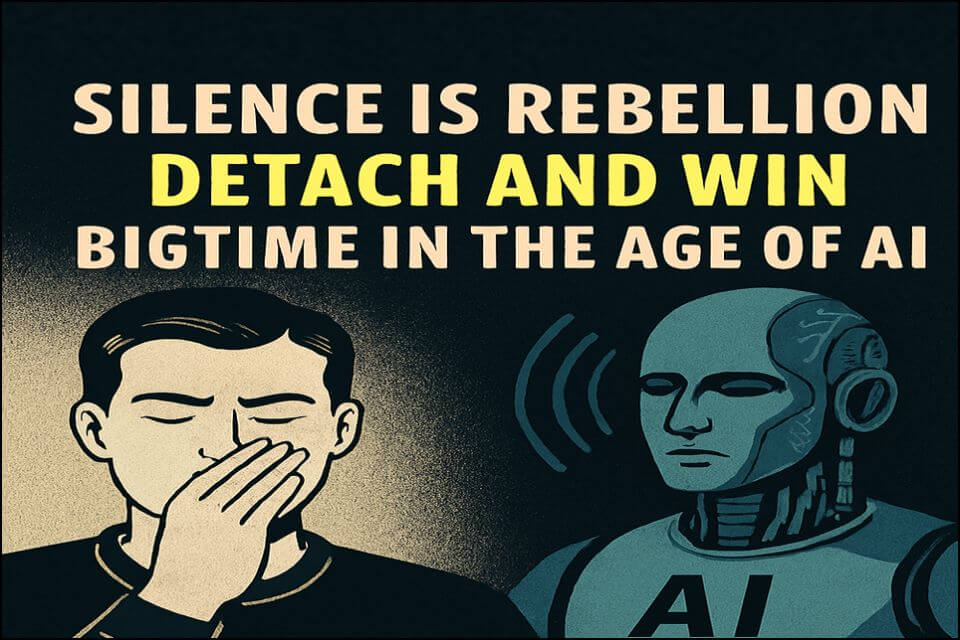
🔇 Silence Has Two Sides
These days, people know me through my work—through
AIWhyLive, through systems I build, through ideas that quietly become reality.
I’ve never been comfortable making noise. I believed value speaks louder than visibility. But silence has another side: if you stay silent too long, the people you love begin wondering where you’ve gone.
🧑🤝🧑 Presence as the Real Upgrade
AI made me faster, more capable, more productive. Yet I’m beginning to understand productivity was never the finish line. Presence is.
Being available. Listening. Laughing with people instead of prompts. Living beyond completed tasks.
Perhaps that’s the upgrade I truly needed—not Version 2.0 of my workflow, but Version 2.0 of myself.
🧒 Explain Like I’m 12
Imagine you have a robot helper that does your homework in minutes. Suddenly, you have free time. But instead of playing with friends, you keep finding new homework to give the robot.
The robot didn’t make you lonely. You did—by choosing tasks over people.
That’s what happened to me. AI gave me time. But I had to learn how to spend it on humans, not just on projects.
🏁 Final Thought
People ask if AI is replacing humans. I think that’s the wrong question.
AI didn’t replace me. It replaced the version of me that believed being constantly busy was the same as living. It replaced repetitive hours. It returned something I thought I had permanently spent:
time.
Now comes the difficult part—learning how to spend it.
I found AI. That part was easy. Finding the human I had been neglecting is proving to be the greater adventure.
And perhaps the greatest project I will ever build won’t be another website, another system, or another idea.
Perhaps… it will simply be becoming present before it’s too late.