AI can think faster. Work longer. Remember more. And increasingly, act with less human supervision.
Is Human Still the Alpha in the Age of AI?
If artificial intelligence can increasingly think, create, plan and act, what exactly makes humans the boss?
For most of human history, we had a simple arrangement.
Humans gave orders.
Machines followed them.
A calculator calculated.
A washing machine washed.
A computer processed.
A search engine searched.
Even the smartest software was waiting for someone to click.
Then artificial intelligence changed the arrangement.
AI can now write, code, research, create images, analyze information, plan tasks and increasingly take actions through software.
The machine is no longer simply waiting for instructions.
It can receive a goal.
Then work toward it.
That changes the question.
It is no longer simply:
“How smart is AI?”
The more uncomfortable question is:
“If AI becomes more capable than humans at many tasks, are humans still the alpha?”
And perhaps the harder question:
What does “alpha” actually mean anymore?
What Does “Alpha” Mean in the Age of AI?
In this article, “alpha” is not being used as a scientific ranking of humans over machines.
It is a metaphor for who determines the direction.
AI may perform a task better than a person.
That does not automatically mean AI determines the purpose of the task.
A machine can optimize a goal.
A human still has to ask:
“Is this the goal we actually want?”
That distinction may become one of the most important ideas in the relationship between humans and AI.
🧠 AIWhyLive Explains
“Alpha” is not really about being the smartest entity in the room.
It is about who determines the direction.
Think about a company.
The employee may know more about spreadsheets.
The programmer may know more about code.
The accountant may know more about taxes.
The engineer may know more about machines.
But somebody still has to answer:
“What are we actually trying to accomplish?”
That becomes increasingly important as AI systems become more capable of performing work with less human supervision.
In September 2026, OpenAI introduced its Agents API in public beta, describing agents that can work with tools, files, code and long-running tasks. OpenAI also provides computer-use capabilities that allow an agent to interact with browser interfaces and software.
That represents an important shift in the way people interact with AI.
Instead of asking AI only for an answer, people can increasingly ask AI to do something.
So yes.
The machine is moving closer to the driver's seat.
But there is a detail we should not miss.
A driver needs a destination.
The Old Boss Was the Smartest Person
For centuries, having more knowledge often meant having more authority.
The village elder knew more.
The experienced craftsman knew more.
The professor knew more.
The manager knew more.
The doctor knew more.
The engineer knew more.
Knowledge created authority.
Then the internet arrived.
Suddenly, enormous amounts of information became available to ordinary people.
Search engines made information easier to find.
Wikipedia made reference material accessible.
YouTube made tutorials widely available.
And AI is taking the next step.
AI can increasingly transform information into useful output and action.
You don't merely search for how to build something.
You can ask AI to help build it.
You don't merely learn how to write code.
AI can write code.
You don't merely brainstorm.
AI can generate hundreds of ideas before your coffee gets cold.
The old advantage—
“I know more than you.”
—is becoming less reliable.
What Happens When the Employee Knows More Than the Boss?
Imagine a strange company.
The AI can:
- analyze thousands of documents
- write reports
- generate software
- summarize meetings
- monitor projects
- compare options
- identify patterns
- create presentations
- automate repetitive work
- remember instructions
- operate digital tools
And the human says:
“Good job.”
Then goes back to scrolling.
Who is actually in charge?
This is where the human-versus-AI conversation gets interesting.
The biggest question may not be whether AI becomes the boss.
It may be whether humans voluntarily become assistants to their own tools.
👦 ELI12: Imagine You Have a Super-Smart Robot
Imagine your family buys a robot.
It can clean your room.
Cook dinner.
Help with homework research.
Organize your clothes.
Find information.
Build things.
Remind you about appointments.
Amazing.
But then something strange happens.
You stop deciding what you want.
You simply ask:
“Robot, what should I do today?”
The robot gives you ten suggestions.
You ask which one is best.
It gives you three choices.
You ask which one it would choose.
It chooses one.
You follow it.
You have a very powerful robot.
But a weaker human.
The robot didn't necessarily take control.
You handed it over.
The New Alpha Test
Perhaps being “alpha” in the AI age should not mean being smarter than AI.
That comparison may become increasingly difficult in many narrow areas.
AI can process enormous amounts of information.
It can generate thousands of words in seconds.
It can operate continuously.
And AI agents can increasingly perform multi-step tasks instead of simply responding to one prompt.
OpenAI describes agents as systems that can independently accomplish tasks on behalf of users, using models, tools and defined guardrails.
So perhaps humans need a different definition of power.
Not:
“Who knows more?”
But:
“Who decides what matters?”
The Human Advantage May Be Smaller—and Bigger—Than We Think
AI can generate a business plan.
But should you start the business?
AI can write an apology.
But are you actually sorry?
AI can create a love letter.
But do you love the person?
AI can generate a thousand career options.
But which life do you want?
AI can analyze your finances.
But what are you willing to sacrifice?
AI can create an image of your dream house.
But what does “home” mean to you?
AI can give you ten answers.
But sometimes the hardest human problem is knowing which question is worth asking.
That is not merely intelligence.
That is judgment.
🐘 Elephant in the Room: What If AI Becomes Better Than Us?
Let's stop pretending this question does not exist.
What if AI eventually becomes better than humans at many intellectual tasks?
What if machines become better programmers?
Better analysts?
Better researchers?
Better writers?
Better designers?
Better planners?
Better at discovering patterns?
Better at making decisions inside clearly defined environments?
Then saying:
“Humans are still the alpha because humans are smarter.”
would depend on a comparison that could change.
A better question is:
Does human worth have to depend on outperforming a machine?
A calculator did not make mathematicians worthless.
A camera did not make human vision meaningless.
A washing machine did not make humans inferior because it could wash clothes faster.
A spreadsheet did not eliminate the need for human judgment.
AI is different in an important way because it operates much closer to the territory traditionally associated with human intelligence.
That is why the transition feels different.
The Real Battle May Be Over Human Agency
Here is the word that matters:
Agency.
Human agency means retaining the ability to make meaningful choices and act on your own goals.
AI can increasingly perform actions.
But humans still need to decide what those actions are for.
There is a huge difference between:
“AI decided what my life should be.”
and:
“I decided what mattered, and AI helped me get there.”
The first represents surrender of agency.
The second represents technology being used as leverage.
That distinction may become increasingly important as AI agents become more capable of acting on a user's behalf.
The AI Paradox
AI can make you more powerful.
And AI can make you more passive.
Same technology.
Different human.
One person says:
“AI, help me build this.”
Another says:
“AI, tell me what to do.”
Those sentences look almost identical.
They are not.
The first person remains the architect.
The second risks becoming the passenger.
This may become one of the important dividing lines of the AI age.
Not simply:
AI users vs. non-AI users.
But:
AI-directed humans vs. human-directed AI.
The Future Boss May Not Be the Smartest One
Imagine two people.
Person A
Uses AI for everything.
AI chooses the topic.
AI creates the plan.
AI writes the content.
AI chooses the design.
AI evaluates the result.
AI decides what to improve.
The human presses:
Generate.
Person B
Uses AI aggressively.
But decides:
- Why this?
- Why now?
- For whom?
- At what cost?
- What should not be automated?
- What should remain private?
- What matters?
- What is enough?
Person B may actually use more AI than Person A.
But Person B is still steering.
That may be the difference.
🧠 AIWhyLive Explains: The Alpha Is the One Holding the Compass
A calculator may be better at arithmetic.
A GPS may be better at navigation.
An AI may be better at processing information.
None of these automatically answers the most human question:
“Where should we go?”
A compass does not need to know how to walk.
It helps establish direction.
Maybe humans in the AI age need to become less obsessed with being the fastest calculator in the room.
And more obsessed with holding the compass.
Because if AI can increasingly handle the how, the human question becomes:
Why?
The Most Dangerous Human Sentence in the AI Age
It may not be:
“AI will replace us.”
It may be:
“AI knows best.”
That sentence sounds harmless.
But the moment we stop questioning the machine, we risk turning AI from a tool into an authority.
AI can be wrong.
AI can misunderstand context.
AI can optimize the wrong goal.
AI can confidently produce incorrect information.
Increasingly autonomous systems also raise questions about oversight, unintended consequences, security, privacy and the ability of humans to understand and control what systems are doing.
OpenAI's own documentation for computer-use agents instructs developers to monitor agent activity, handle access requests and verify results rather than simply assuming that an autonomous action is correct.
The more capable the tool becomes, the more important meaningful human oversight can become—not less.
👦 ELI12: Who Is the Alpha?
Imagine a dog.
You throw a ball.
The dog runs after it.
The dog may run faster than you.
The dog may be stronger than you.
The dog may even have better hearing than you.
But you decide where the ball goes.
That is the point.
Being the alpha is not necessarily about being the strongest creature.
It is about who chooses the direction.
In the AI age:
AI may run faster.
AI may remember more.
AI may calculate better.
AI may produce more.
But humans still need to decide:
Where are we throwing the ball?
What If We Get the Relationship With AI Wrong?
This is the question worth thinking about.
We are building increasingly capable machines to give humans more freedom.
But what happens if we use that freedom to become even more distracted?
We automate our work.
Then fill the saved time with more notifications.
We automate writing.
Then produce more content nobody reads.
We automate research.
Then consume more information than we can understand.
We automate decisions.
Then create so many options that we cannot decide anything.
We automate productivity.
Then become addicted to productivity.
We build machines to give us time.
Then give the time back to the machine.
That would be one of the great ironies of the AI age.
AI Doesn't Need to Defeat Humanity
Maybe AI does not need to conquer us.
Maybe it does not need a robot army.
Maybe it does not need to become evil.
Maybe the real danger is much more ordinary.
Humans become comfortable.
Comfortable enough to stop learning.
Comfortable enough to stop questioning.
Comfortable enough to stop creating.
Comfortable enough to let AI choose.
Comfortable enough to say:
“The AI said so.”
That is not necessarily an AI takeover.
It is something quieter.
A human hand slowly leaving the steering wheel.
🎤 Drop Mic
So, is the human still the alpha in the Age of AI?
Maybe the question itself needs to change.
The future does not have to be a contest in which humans must outperform AI at every task.
AI can give us answers.
It can give us options.
It can give us code.
It can give us images.
It can give us strategies.
It can give us speed.
It may increasingly take care of entire workflows while we sleep.
But none of that automatically gives us a reason to wake up.
That's the hard part.
Purpose.
And purpose is a strange thing.
You cannot simply download it.
You cannot completely automate it.
You cannot generate it with one button.
You have to decide what your life is for.
So perhaps the real alpha in the Age of AI is not the human who beats the machine.
It is the human who can stand beside an extraordinarily powerful machine and still say:
“I know where we're going.”
Because the ultimate test of AI may not be whether machines can become more human.
It may be whether humans can remain human while using them.
AI can hold the map.
AI can calculate the route.
AI can even drive parts of the journey.
But if you no longer know where you want to go—
you are not the passenger.
You are lost.
And that may be the real question of the AI age:
Who Is Holding the Compass?
Frequently Asked Questions About Humans and AI
Is human still the alpha in the Age of AI?
AI can already perform many tasks faster or at greater scale than humans, but “alpha” is used here as a metaphor for controlling direction and purpose. The central human question is not simply who is more capable, but who decides what the technology is being used to accomplish.
What is the difference between humans and AI?
AI can process information, generate content and perform increasingly complex tasks. Humans remain responsible for defining goals, values, priorities and the purposes for which AI is used.
What are AI agents?
AI agents are systems designed to perform multi-step tasks toward a goal, potentially using tools, software and external information with less step-by-step human instruction. Agent technology is moving AI beyond simple question-and-answer interactions toward systems that can perform actions on a user's behalf.
Will AI replace humans?
AI can automate or transform many tasks, but “replace humans” is too broad to describe every job or human activity. The effects depend on the task, industry, organization, technology and how people choose to use AI.
What is human agency in the age of AI?
Human agency means retaining the ability to make meaningful choices and act on your own goals. In an AI-driven world, it includes deciding what to automate, what to delegate, what to question and what should remain a human decision.
Sources and Further Reading
When cable news anchors start nodding along to former tech researchers warning that artificial intelligence is turning into an uncontainable Read more
For more than three decades in the IT industry, academe, and hard life, I’ve been obsessed with one deceptively simple Read more
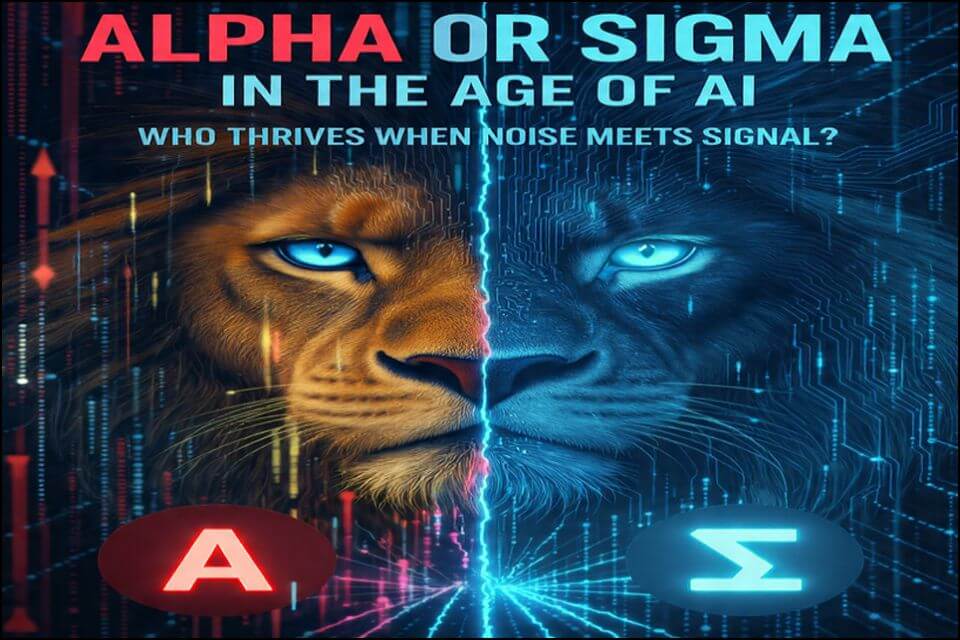
🌑 Defining the Archetypes: The Stage vs. The Studio In the old world, the hierarchy was simple. Today, AI has Read more
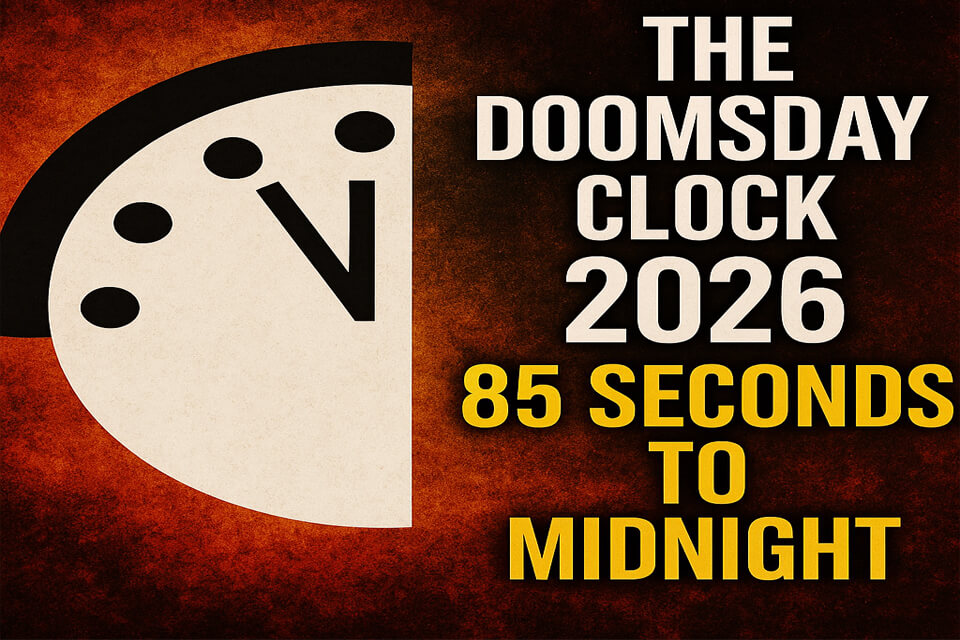
Why the World’s Scariest Stopwatch Matters More in the Age of AI 📖 Abstract: Humanity’s Countdown In January 2026, the Read more