Once upon a time, creativity was synonymous with solitude. The lone poet, sleepless in a candlelit room. The painter, tormented by inspiration. The coder, whispering to the void. We romanticized the genius creator—the rare soul who could conjure brilliance from thin air. But here we are, living in the age of Copilot, Midjourney, ChatGPT, and co-creation. And guess what? The myth is cracking.
We’re not witnessing the end of creativity—we’re watching it evolve into something more democratic, more collaborative, more human.
1. 🤖 Prompts Are the New Paintbrush
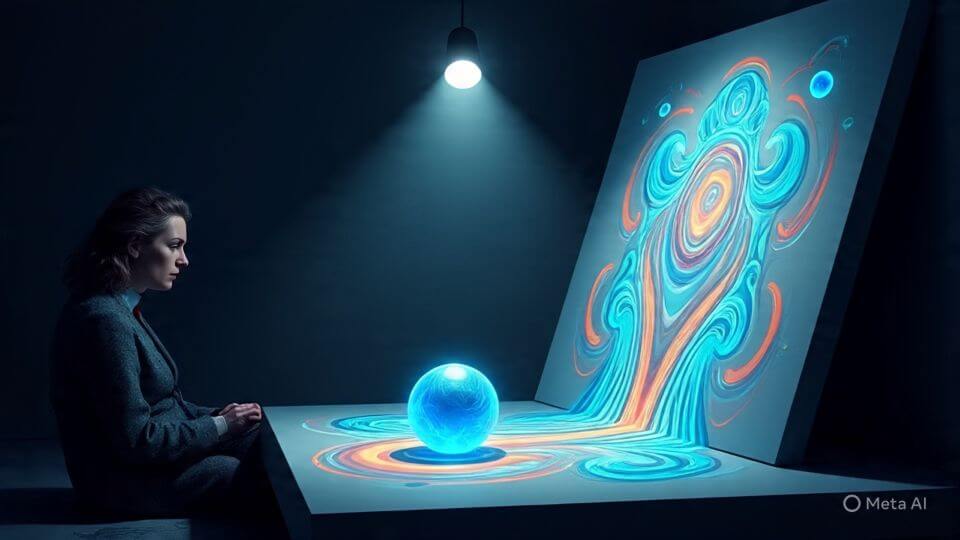
Let’s face it: prompts are creative inputs. When you describe a scene to an AI (“a dancing jeepney under starlight”), you’re designing an experience. You choose mood, framing, and reference points. It’s no less intentional than mixing oil paints. The difference? You’re co-piloting with a synthetic partner that can churn out variations, loop back, and push you into wild territory.
Prompt engineering isn’t cheating. It’s composing.
So when someone says, “That’s not original—it’s just AI,” ask them if they consider collage art fake. Or jazz improvisation. Or cultural remixing. We’ve always created from context. AI just mirrors that reality back to us—at scale.
2. 🎭 The Death of the Genius Is a Good Thing
We’ve long worshipped the myth of the lone genius. But it’s a narrow ideal:
- It erases communal creativity (hello, bayanihan).
- It undervalues the curator, the remixer, the recontextualizer.
- It pretends mental health, privilege, and time aren’t creative gatekeepers.
AI breaks this mold. It levels the playing field. You don’t need elite software or studio access—you need intention. A sari-sari store owner with a smartphone can craft visual campaigns with AI. A public school teacher can turn lesson plans into interactive story zines.
Genius isn’t dead. It just has collaborators now.
3. 🧬 Originality Isn’t Purity—It’s Perspective
When we talk about originality, we often mean “untouched,” “pure,” or “never-before-seen.” But truly new things are rare. Most innovation is interpretation. Remix. Flip. Adaptation.
- TikTok dancers build on others’ moves.
- Filipino meme pages inject satire into global templates.
- AI-generated essays may blend a dozen sources, but if the prompt reflects Filipino humor or social insight, that’s a new voice, not just new text.
We must ask: Is originality the product, or the lens it’s viewed?
4. ⚠️ Who Gets Credit When Culture Is Synthesized?
Now the hard part: when an AI model uses Filipino street slang, Ilocano idioms, or a Visayan beat—who deserves credit?
- Was that dialect scraped from public Facebook posts without consent?
- Was that jeepney image pulled from a local artist’s Flickr page?
- Was the rhythm inspired by indigenous chant patterns… without acknowledgment?
AI tools are built on datasets. Datasets are built by us. In this new remix economy, attribution must evolve.
Creators need:
- Better tagging systems (e.g., “prompt inspired by Rizal’s ‘Noli Me Tangere’”)
- Community credits (“based on Cebuano netizen humor”)
- Open Creative Commons spaces for ethical reuse
We don’t just need AI literacy. We need cultural consent literacy.
5. 🚀 Toward a Collective Creator Ethos
Here’s a wild idea: what if we stopped asking “Who made this?” And instead asked: “Whose soul does it reflect?”
Imagine:
- Open-source zines that credit prompt artists, illustrators, and dataset curators
- Barangay workshops where teens remix elders’ folklore using AI tools
- AI-generated campaign materials that pair tech with Kapwa—shared humanity
Creativity becomes not an ego project, but a community engine. You, me, and Copilot in the loop.
🐾 Final Thought
The myth of the genius creator was never truly inclusive. AI didn’t kill creativity—it cracked open its gatekeeping walls. In its place rises a new model: blended, multi-voiced, ethically aware, where a tricycle driver can generate cinematic poetry, where prompt engineers become the next Rizals.
Originality isn’t gone. It’s shifting shape. And maybe, just maybe—it was never about being the first. It was about being true.
📚 Sources
- Lanier, Jaron – Ten Arguments for Deleting Your Social Media Accounts Right Now (AI critique on collective intelligence and authorship) [Book Reference – Henry Holt & Co., 2018]
- Burroughs, W.S. (attributed) – “Eat Shit—Billions of Flies Can’t Be Wrong” Quote Investigator
- Bernstein, Ethan & Shore, Sarah – Creativity in the Age of AI: Rethinking What It Means to Be Original Harvard Business Review
- Resnick, Mitch – Cultivating Creativity in a Generative World MIT Media Lab Reflections
- Floridi, Luciano – AI as a Co-Author: Ethics of Attribution Oxford Internet Institute
- UNESCO Creative Rights Report – Artificial Intelligence and Cultural Ownership UNESCO Digital Culture
- Creative Commons – Attribution and Remix in the Age of Generative Tools Creative Commons Blog
- AIWhyLive.com Archive – Digital Colonialism and the Filipino Future – Coding Creativity: From Zines to Carousels – Mental Poverty in the Age of AI – Rewarding Stupidity vs Deep Thinking in the Age of AI
- TikTok Creator Economy Report 2024 – Remix and Attribution in Short-Form Media TikTok Business Insights

In an era where Filipino professionals log overtime just to keep up, a radical idea is gaining traction: what if Read more
In today's fast-paced digital era, success isn’t solely about hard work—it’s about working smart. Artificial Intelligence is the ultimate game-changer, Read more
Life doesn’t always go as planned. Careers shift, businesses struggle, and dreams sometimes feel out of reach. But in the Read more

You’re deep in the zone—building a carousel, coding a chatbot, weaving a metaphor—and then: “⚠️ You’ve hit your chat limit. Read more