The AI Advantage: Stop Thinking Someone Else’s Win Is Your Loss
What if your biggest competitor is not the person beside you, the business across the street, or the colleague who just got promoted? What if it is the mindset that makes you believe their success automatically reduces your chances of succeeding?
Artificial intelligence is changing how people work, learn, create, communicate, and earn. It is lowering some barriers to entry, making specialized tools more accessible, and allowing individuals and small teams to do things that once required much larger organizations.
Yet there is something that technology cannot automatically upgrade: the way we think about other people's success.
Some people see AI as an opportunity to build. Others see it as a threat to defend against. Some welcome collaboration. Others guard every idea, every contact, every technique, and every small advantage as if sharing one useful piece of information would destroy their future.
That is the zero-sum mindset.
If your only way to win is to make sure someone else loses, you may be competing against the very opportunities that could help you grow.
What Exactly Is a Zero-Sum Mindset?
A zero-sum mindset assumes that success is a limited resource. If one person gets more, somebody else must get less. If another business gains customers, yours must lose them. If a colleague receives recognition, your own value must have diminished.
In economics and game theory, a zero-sum situation is one in which one participant's gain is matched by another participant's loss. Some situations really do work this way: a single vacant position, a limited contract, a championship, or a fixed budget.
But the mistake is treating every human interaction, business opportunity, and professional relationship as if it were a zero-sum game.
Not every opportunity is a fixed pie. Sometimes people can expand the pie by creating new products, improving services, sharing knowledge, reaching new customers, and solving problems that previously had no affordable solution.
AI Is Changing the Size of the Pie
For decades, access to specialized knowledge and expensive tools created barriers. A small business could not always afford the same research, design, marketing, automation, or technical resources available to a large company.
AI is changing parts of that equation.
A small business owner can use AI to draft marketing materials, analyze customer feedback, organize operations, and explore ideas. A student can use it to understand difficult concepts. A professional can use it to automate repetitive tasks. A solo developer can prototype a solution that previously required a team.
These tools do not guarantee success. They do not remove the need for experience, judgment, capital, execution, or accountability. But they can lower certain barriers and expand what individuals and small organizations can attempt.
That is important because opportunity is not always a fixed quantity waiting to be divided. Sometimes innovation creates opportunities that did not exist before.
AI does not simply help people compete for existing opportunities. It can help people create new ones.
Five Everyday Signs of a Zero-Sum Mindset
1. You Treat Knowledge as a Secret Weapon
You discover a useful tool, technique, or workflow. Instead of sharing what you learned, you hide it because somebody else might become better.
There are legitimate reasons to protect trade secrets, private data, original work, and confidential business information. But protecting sensitive information is different from refusing to share every harmless lesson.
Knowledge shared responsibly can create professional relationships, improve communities, and lead to opportunities you would not have discovered alone.
2. You See Every New Competitor as an Enemy
A new business opens nearby. A colleague launches a side project. A freelancer offers a similar service.
Your first reaction is resentment rather than curiosity.
Competition can expose weaknesses and push everyone to improve. It can also reveal new customer needs and create demand for better products and services.
You do not have to celebrate every competitor. You do have to understand that their existence does not automatically make your own work worthless.
3. You Confuse Recognition with Value
Someone receives attention, praise, followers, or an award. You feel that your own contribution has been overlooked.
Recognition is limited in some situations, but value is not always measured by public attention. A person can make a meaningful contribution without becoming the most visible person in the room.
The goal should not be to diminish someone else's achievement. It should be to make your own contribution meaningful and visible.
4. You Refuse to Collaborate Because You Fear Being Outshone
You avoid working with someone more experienced, more creative, or more technically capable because you worry that they might receive more credit.
That fear can prevent you from learning. It can also prevent a good idea from becoming something useful.
Collaboration requires clear roles, fair recognition, trust, and agreements. It does not mean surrendering your rights or allowing others to take advantage of you.
5. You Want Others to Fail Before You Feel Successful
This is perhaps the most damaging sign.
Instead of measuring your progress against your goals, you measure it against another person's setbacks. Their failure becomes your reassurance.
That is not sustainable confidence. It is dependence on someone else's misfortune.
AI Makes the Old Mindset Even More Expensive
Before AI became widely accessible, some people gained an advantage by controlling information, specialized tools, technical skills, or access to resources.
Those advantages have not disappeared. Expertise, experience, distribution, trust, and execution still matter. But the cost of experimenting with ideas and producing certain kinds of work has changed.
If you refuse to adapt, refusing to collaborate will not protect your position forever.
Consider three examples:
The Employee
An employee sees a colleague using AI to organize reports and reduce repetitive work. A zero-sum thinker may complain that the colleague is trying to look better or make everyone else look inefficient.
A more constructive response is to learn the workflow, check its accuracy, and explore how the team can improve. The employee who understands the tool and its limitations may become more capable.
The Small Business Owner
A business owner discovers that another local business is using AI to improve customer communication.
The zero-sum response is to dismiss the competitor or copy everything without understanding it. A better response is to identify what customers actually need, improve the service, and find a distinct advantage.
The Content Creator
A creator sees another person producing videos, articles, or graphics with AI.
Instead of assuming that the other creator is stealing their opportunity, the creator can focus on original perspective, useful information, credibility, storytelling, and audience trust.
When producing content becomes easier, substance and judgment become even more important.
The Alternative: A Positive-Sum Mindset
A positive-sum mindset recognizes that people can create value together. One person's improvement does not automatically require another person's decline.
It does not mean that everyone must agree, share everything, or abandon competition. It means looking for opportunities where cooperation can produce a better outcome than working alone.
Zero-Sum Thinking
- Your success threatens me.
- Knowledge must be hidden.
- Competition means hostility.
- Recognition is a limited possession.
- Someone must lose for me to win.
Positive-Sum Thinking
- Your success can teach me something.
- Knowledge can create shared value.
- Competition can improve quality.
- Recognition can be earned in different ways.
- We can create new opportunities.
The difference is not whether you compete. It is whether competition is the only way you know how to move forward.
Seven Ways to Escape the Zero-Sum Trap
1. Compete on Value, Not Jealousy
Ask what you can improve: quality, service, reliability, speed, affordability, or customer experience. Focus on what you can contribute instead of obsessing over what others have.
2. Learn from People Who Are Better at Something
Do not treat another person's expertise as an insult. Study their methods, ask thoughtful questions, and identify what you can learn without copying their work or taking credit for it.
3. Share Responsibly
Share useful knowledge when appropriate. Protect confidential information, personal data, intellectual property, and legitimate business secrets. Generosity and good boundaries can coexist.
4. Use AI to Multiply Your Capabilities
Use AI to explore, draft, organize, compare, automate, and learn. Verify its output. Develop your own judgment. Do not mistake access to a tool for mastery of a subject.
5. Build Relationships Before You Need Them
A professional network is not merely a list of people who might help you. It is a community of people who exchange knowledge, solve problems, and build trust over time.
6. Give Credit Where It Is Due
Acknowledge collaborators, sources, original creators, and people whose work helped you. Credibility grows when people know you are fair.
7. Measure Progress Against Your Own Goals
Set meaningful targets. Track improvement. Celebrate milestones. Learn from other people's achievements without turning their lives into a scoreboard for yours.
The Elephant in the Room: Not Everything Is Win-Win
Let's be realistic.
Some jobs are limited. Some contracts have only one winner. Some businesses compete for the same customers. Some negotiations involve conflicting interests. Resources can be scarce, and not every partnership is fair.
A positive-sum mindset does not require you to be naïve. It does not mean trusting everyone, accepting exploitation, giving away your work, or pretending that conflicts of interest do not exist.
You can negotiate firmly, protect your interests, compete aggressively within ethical boundaries, and still recognize opportunities for cooperation.
The real question is whether you can distinguish a genuinely limited resource from an opportunity that could grow if people worked differently.
Be competitive enough to protect your interests. Be intelligent enough to recognize when cooperation creates more value.
AIWhyLive Explains: The Mindset Is Part of the Technology
Artificial intelligence is a tool. Its impact depends partly on the people and organizations using it.
Give a tool to someone who believes that every other person is a threat, and it may become another instrument for hoarding, manipulation, or unhealthy competition.
Give the same tool to someone who values learning, accountability, creativity, and collaboration, and it may help create better services, new products, and useful solutions.
The difference is not always the software. Sometimes it is the mindset behind the screen.
This is why digital intelligence must go beyond knowing how to use applications and write prompts. It must include the ability to think critically, recognize other people's value, and make responsible decisions.
In our previous article, Digital Intelligence: Protect Your Reputation in the Age of AI, we explored why technology should never replace personal judgment.
This article takes that principle further: do not let technology make you more efficient at thinking small.
ELI12: Explain It Like I'm 12
Imagine five children sharing a small piece of land.
One child thinks there is only enough room for one garden. If another child plants vegetables, that means less space and less opportunity for everyone else.
But what if they work together? One grows vegetables, another plants fruit, another waters the plants, and another builds a small fence.
They may end up with a bigger and more useful garden than any one child could have created alone.
That is positive-sum thinking.
AI is like a new set of gardening tools. It can help people work faster, but it cannot guarantee a good harvest. People still need a plan, skills, responsibility, and cooperation.
Frequently Asked Questions
What is a zero-sum mindset?
A zero-sum mindset assumes that one person's gain must come at another person's expense. It treats success, recognition, knowledge, and opportunity as if they are always fixed resources.
What is the difference between zero-sum and positive-sum thinking?
Zero-sum thinking focuses on gains and losses that cancel each other out. Positive-sum thinking looks for ways people can create additional value through innovation, cooperation, and shared opportunities.
Does AI create a zero-sum economy?
Not automatically. AI can intensify competition in some areas while creating new products, services, and opportunities in others. Its effects depend on how people, businesses, and institutions adopt and govern it.
Does positive-sum thinking mean I should share everything?
No. Protecting confidential information, intellectual property, privacy, and legitimate business interests is important. Positive-sum thinking means recognizing where responsible cooperation can create mutual value.
Can businesses still compete while collaborating?
Yes. Businesses can compete on quality, price, service, and innovation while cooperating in areas such as training, standards, research, community development, and shared infrastructure.
How can I develop an abundance mindset in the age of AI?
Focus on learning, creating value, sharing responsibly, building relationships, recognizing other people's contributions, and using AI to expand your capabilities rather than simply trying to outperform everyone around you.
The Bottom Line: Stop Protecting a Smaller Pie
The age of AI is giving more people access to tools that can help them create, learn, and solve problems.
But access alone does not guarantee progress.
You can have the best AI subscription and still think like someone who believes that another person's success is a personal defeat.
You can master every new tool and still refuse to learn from the people around you.
You can call yourself innovative while spending most of your energy protecting an advantage that may soon disappear.
The real advantage is not simply knowing how to use AI. It is knowing how to use it without losing your ability to think, cooperate, compete fairly, and create value.
Your win does not have to be my loss. And my success does not have to be your failure.
The world will always have competition. But the future does not have to belong exclusively to those who know how to defeat others.
It can also belong to those who know how to build something better together.
Stop thinking about who gets the bigger slice. Start asking who can help make the pie bigger.
That is not weakness. That is a smarter way to compete in the age of AI.

The Internet Never Forgets. Are You Being Smart Enough to Remember That? You can delete a post. You cannot always Read more
Forget the Throne. The New Crown is an Algorithm. 🌑 The Shift: From "Knowing" to "Owning" For centuries, power was Read more
🌑 The Illusion of Control in the Age of Noise We live in an era where every scroll, every click, Read more
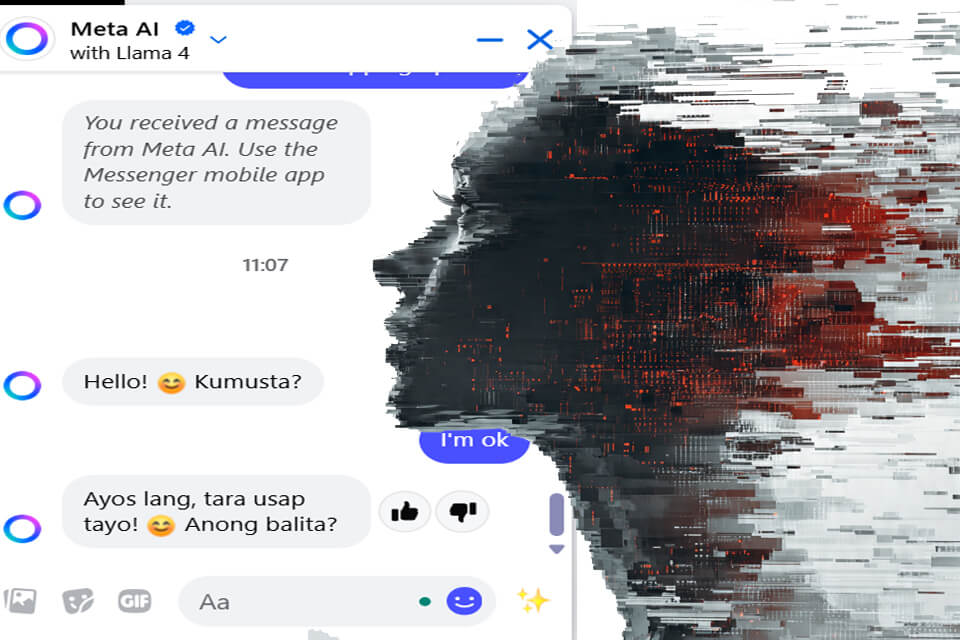
The New Loneliness in the Age of Automated Connection 📖 Abstract We used to complain about being “seen-zoned” on Messenger Read more