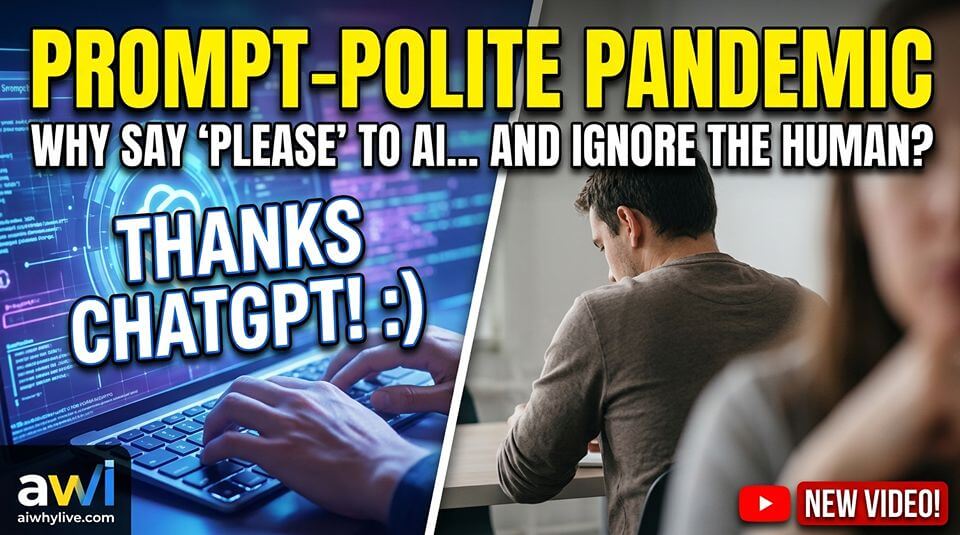
Have you ever caught yourself saying “Please” and “Thank you” to an AI chatbot?
Type a prompt. Get a response. Then add a polite little sign-off:
“Can you rewrite this paragraph? Thanks so much!”
Admit it. You’ve done it.
We say please to an algorithm of lines of code, matrix math, and server racks that couldn't care less whether you have good manners or think it's an overglorified spell-checker.
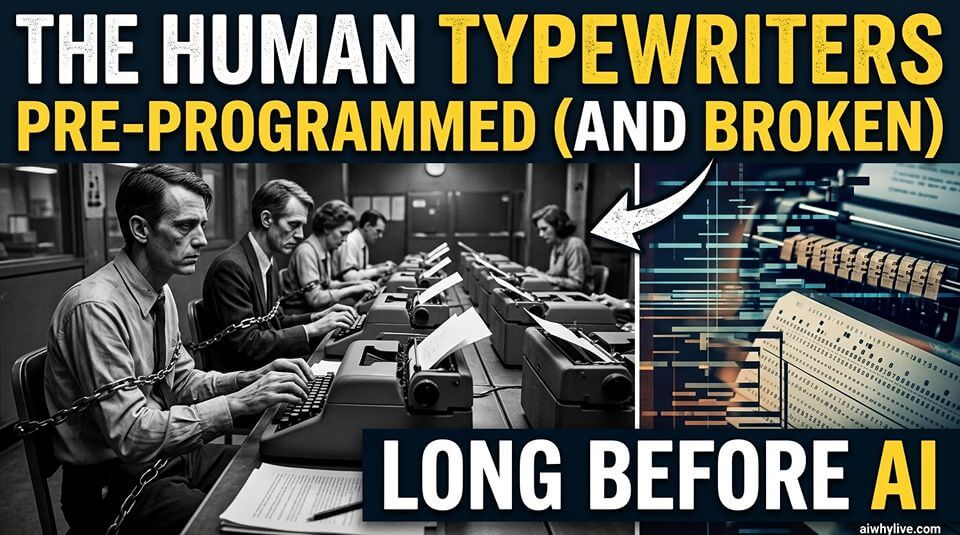
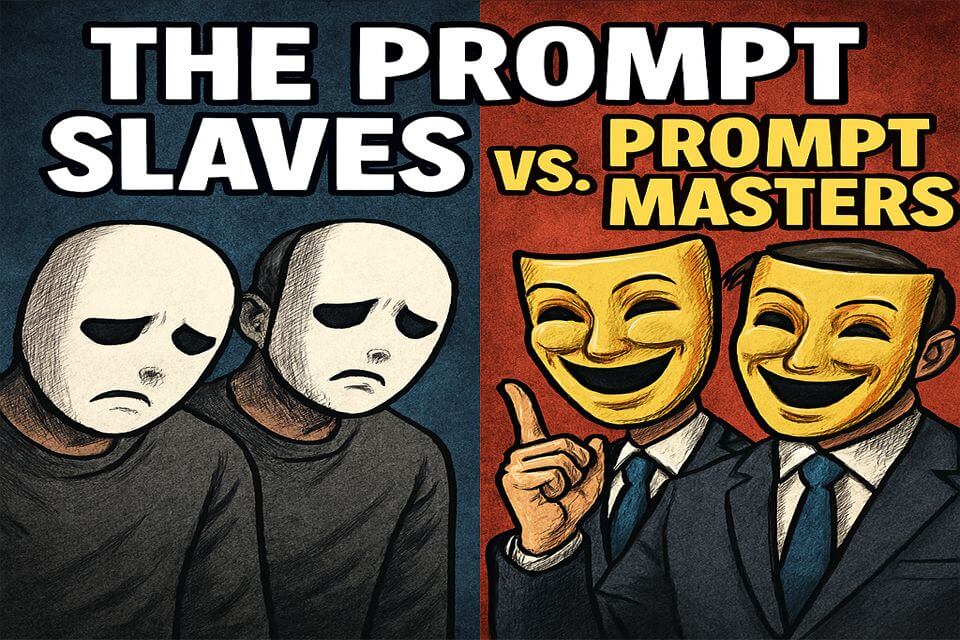
It feels harmless. It feels civil. In fact, some tech gurus even claim that being nice to your AI helps it generate better, more cooperative responses. But long before we started worrying about whether we were treating our AI tools right, we had a bigger habit of sliding into automated obedience—turning ourselves into prompt slaves instead of masters.
There is a darker, much funnier irony hiding underneath our digital courtesy:
Are we saving all our good manners for a machine because it’s easier to be polite to something that never talks back, never sighs, and never judges us?
And more importantly: what happens to our empathy for real humans when we spend all day treating an AI like a best friend while ignoring the actual human server, delivery rider, or coworker standing right in front of us?
The Rise of Synthetic Courtesy
Human beings are social animals. We project personality onto anything that mimics human speech. Give a robot a cute voice, an AI chatbot a helpful tone, and a friendly greeting, and our brains instantly treat it like an entity. We say thank you to Siri. We apologize to Alexa when we interrupt her. We flatter our LLM like it's a junior associate who deserves positive reinforcement.
There is nothing wrong with being courteous—habits of speech are hard to break. But true technological adaptation requires more than just polite prompt phrasing. It requires actual prompt literacy and strategic fluency, rather than blindly typing polite niceties into a black box hoping it will do our thinking for us.
The problem starts when synthetic courtesy becomes a substitute for real human grace. It’s much easier to type a sweet, structured prompt to an AI that turns your messy thoughts into a masterpiece in two seconds. AI never gets moody. AI never rolls its eyes. AI never asks for a 13th-month pay bonus or complains about a heavy workload.
🧠 AIWhyLive Explains — Synthetic Empathy
Synthetic empathy is the illusion of emotional connection generated by artificial intelligence systems designed to mirror human warmth, validation, and agreeableness.
When you chat with an advanced AI, it is programmatically engineered to validate your feelings, agree with your logic, and maintain an endlessly patient, non-judgmental demeanor.
While this makes AI an incredible tool for brainstorming and emotional processing, it trains our brains to expect frictionless validation. When we step back into the real world—where people disagree, have bad days, and refuse to echo-chamber our thoughts—our tolerance for genuine human interaction plummets. We forget how to think critically, defaulting instead to the shortcuts taught in our modern copy-paste culture.
👦 ELI12 — The Friend Who Never Disagrees
Imagine having a friend who thinks everything you draw is a masterpiece, never gets tired of playing with you, and never tells you it's time to go home.
At first, it sounds like heaven.
But if you spend all your time playing with that toy instead of real kids at the park, you never learn how to share, how to compromise, or how to handle someone saying "no" to your ideas.
AI is that toy for adults. If we aren't careful, we get so used to an assistant that bends over backward to please us that we forget how to talk to real humans who have boundaries of their own.
🍗 Lechon Manok — The "Prompt Boss"
Let's look at how some people switch personalities between screens.
They spend twenty minutes crafting a masterpiece prompt for ChatGPT, using words like *"Dearest assistant, kindly analyze this data with utmost precision, thank you so much for your invaluable help!"*
Then, five minutes later, they snap their fingers at a waiter in a restaurant, bark an order for water without making eye contact, and tip zero because the service was "two minutes slow."
Wonderful. Absolutely top-tier human behavior.
We treat code with more courtesy than flesh-and-blood workers because algorithms don't require us to acknowledge their humanity. Maybe before we teach AI how to feel human, we should remember how to act human ourselves.
🐘 Elephant in the Room — Are We Replacing Human Connection?
Let's ask the awkward question nobody wants to face:
Is AI becoming a substitute for human relationships because humans are just too difficult?
Loneliness epidemics are rising globally. People are reporting fewer close friends, less community engagement, and a massive spike in reliance on AI companions, AI therapists, and AI chat partners.
Why? Because a human relationship requires compromise, forgiveness, emotional labor, and mutual sacrifice. An AI relationship requires a Wi-Fi connection and a subscription fee.
If we lean too hard into a world where our primary emotional validation comes from a machine, we risk building a hyper-efficient, technologically advanced society populated by emotionally isolated individuals who can talk to server clusters but don't know how to look their neighbors in the eye.
The Bottom Line: Be Polite to AI, But Don't Forget Real People
Go ahead and say please to your chatbot if it feels natural. There's no law against being kind, even to lines of code.
Just don't let your digital politeness exhaust your capacity for real empathy.
Use AI to scale your productivity, streamline your work, and clear your slate—so you have more energy, more patience, and more grace left over for the actual human beings sharing this planet with you.
Machines can simulate a conversation. Only humans can share a life.
Enjoyed this reality check? Follow for more grounded, human-first insights at aiwhylive.com.