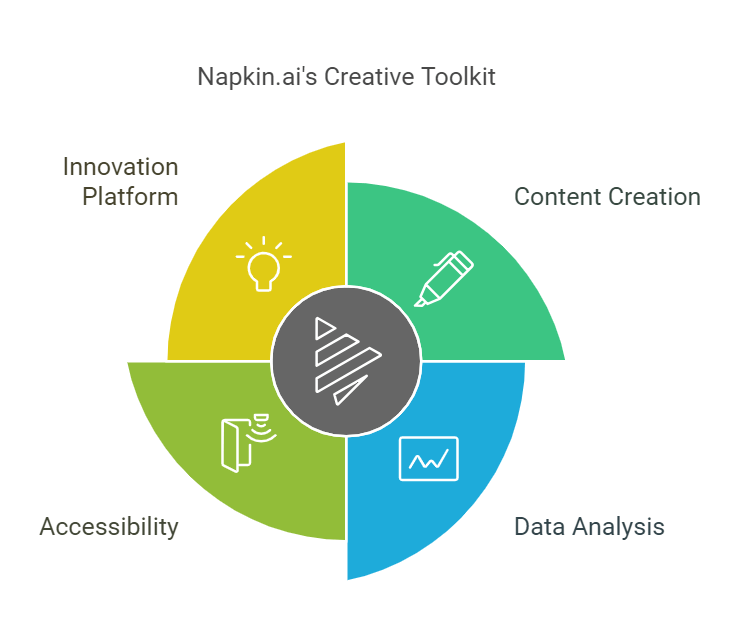
Every single day, a brand-new AI micro-app promises to revolutionize your workflow for just $14.99 a month. Let's separate the genuine workflow upgrades from the glorified API wrappers.
The Infinite App Store Scroll
Open your social media feed or app marketplace right now, and you’ll witness a relentless parade of shiny new AI utilities.
One day it’s an interactive micro-learning platform promising to make you an AI master in fifteen minutes a day. The next, it’s a mindfulness productivity assistant designed to organize your thoughts, or a visual generation tool that instantly turns blocks of text into flowcharts and diagrams.
The marketing campaigns are slick, the landing pages look like Silicon Valley design masterclasses, and the checkout buttons are just one impulse click away.
But when you actually install them, a familiar sinking feeling sets in: half of these apps are literally just a thin visual skin slapped over standard frontier models that you could prompt yourself for free.
🧠 AIWhyLive Explains — Wrapper Economics and UI Arbitrage
Wrapper economics refers to the business model of building proprietary user interfaces around third-party large language model APIs while charging recurring subscription fees for basic prompt automation.
While some wrappers successfully solve specific user friction points—such as instant text-to-visual conversion—many rely on temporary hype cycles and aggressive ad spending before users realize they are paying a monthly tax for standard foundational capabilities.
When a Feature Becomes a Standalone Subscription
The core trick of the modern micro-app gold rush is taking a feature that should honestly just be a native toggle inside your existing workspace and packaging it as a revolutionary standalone startup.
Need diagrams? You get pitched a dedicated visual communication app. Need to learn a skill? You get hit with a micro-learning subscription. Need emotional balance and daily task sorting? There's an AI companion app for that too.
Before you know it, your bank statement is bleeding twenty micro-subscriptions a month—each costing fifteen dollars—just to manage tasks, format text, and generate basic layouts.
You didn't streamline your life; you just built a multi-vendor subscription leak.
🍗 Lechon Manok — The Single Good Knife Principle
Picture this.
You are sitting at your desk late at night, toggling between six different browser tabs and mobile apps, trying to figure out which AI assistant is supposed to help you draft your project notes, which one formats your diagrams, and which one tracks your daily focus.
You feel exhausted, buried under an avalanche of app notifications.
Then you walk away from the screen, head down to the local neighborhood *lechon manok* stall in Bacolod for a late-night bite, and watch the vendor work.
No subscriptions. No dashboard switching. Just one exceptionally sharp knife, a clean chopping block, and a repeatable process that has worked for decades.
Sometimes the best tool stack is the one you can count on one hand.
🐘 Elephant in the Room — The Platform Monopoly Trap
Let's address the uncomfortable truth:
The moment Apple, Google, or OpenAI rolls native versions of these micro-features directly into their core operating systems, entire categories of third-party AI wrapper apps will be wiped out overnight.
Building a business entirely on top of someone else's foundational model API without deep, uncopyable proprietary data is like building a house on rented sand.
When the platform owners decide to absorb your core feature into their next default software update, your monthly subscriber base evaporates.
How to Filter the Hype from Real Utility
Evaluating new AI tools without falling victim to the micro-app trap requires ruthless filtration:
- The Native Test: Before subscribing, ask yourself: *Can I do this exact same thing in five seconds by pasting a prompt into ChatGPT, Claude, or a standard doc app?* If yes, skip the purchase.
- Check for Real Workflow Friction: Does the app solve an agonizing, multi-step manual chore (like turning messy text into clean vector diagrams), or does it just add extra steps to something you already do easily?
- Watch Out for Subscription Bloat: Audit your software expenses monthly. If an app doesn't actively save you hours of billable time or generate direct value, cut it immediately.
- Demand Deep Integration: Favor tools that plug seamlessly into your existing trusted workflows rather than forcing you to open yet another isolated silo app.
👦 ELI12 — The Fancy Wrapper on a Plain Candy Bar
Imagine going to the store and finding a candy bar wrapped in shiny gold foil with a picture of a rocket ship on it, priced at five dollars.
You unwrap it excitedly, only to realize it's just a regular, basic piece of chocolate you could have bought at the corner store for fifty cents.
That is what buying half of these hyped-up AI micro-apps feels like once you look past the marketing landing page.
📝 Note from the Webmaster
📝 A Note from the Webmaster — AIWhyLive
Let's keep it 100. I love digital tools. Sure, AI makes me stupid—and I absolutely love it when it instantly handles tedious regex string replacements. But let's stop falling for every flashy micro-app ad that promises the moon for fifteen bucks a month. Test smart, keep your wallet closed to basic wrappers, and focus on tools that actually earn their keep.
The Bottom Line
The AI app ecosystem is flooded with clever marketing and thin wrappers. Don't let your credit card get chipped away by subscription fatigue.
Keep your tool stack lean, test before you buy, and focus on real utility over hype.
Explore our archives at aiwhylive.com for more human-first insights on tech culture.