The Great Dissonance of the Algorithmic Age
📖 Abstract: The Lure of the Algorithmic Answer
Artificial Intelligence promises the perfect answer, the optimized route, and the universally accepted conclusion—all instantaneously. This is the ultimate comfort: freedom from the messy, frictional labor of true inquiry.
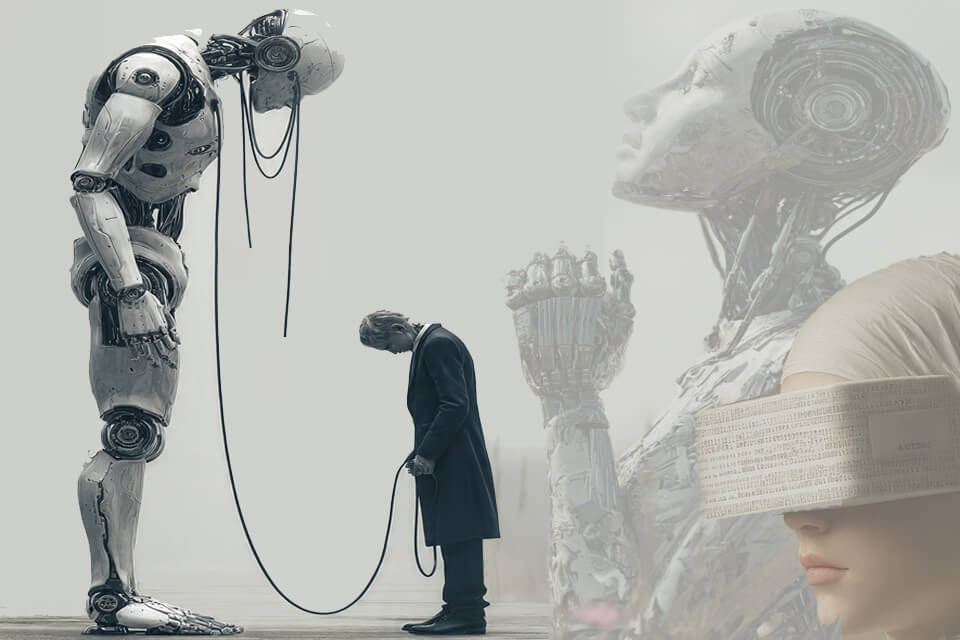
But beneath this seductive promise lies the Uncomfortable Truth: Blind Obedience to the Algorithm. Obedience means outsourcing the uncomfortable process of doubt and discovery to the machine. It is the surrender of intellectual sovereignty.
Conversely, Freedom of Thought in the Age of AI is not just about having a unique idea; it is the strategic, high-friction commitment to challenging the machine’s consensus, even when the machine is statistically superior.
We are entering an era where the most valuable human skill is not creation, but resistance. The final frontier of freedom is the refusal to accept the comfortable, automated answer.
⚡ 1. The Trap of Perfect Compliance
Blind Obedience to the Algorithm is seductive because it flawlessly solves the problem of ambiguity.
- Before AI: Facing a complex problem meant spending 80% of your energy on research, filtering noise, and struggling toward a solution.
- Now: The LLM provides an authoritative, well-cited, perfectly formatted answer in seconds.
A. The Intellectual Consensus Engine
AI is trained on the entire public record of human knowledge. When it speaks, it speaks with the confidence of universal consensus. Using its output without critical review is not Free Thought—it is adopting Algorithmic Consensus as your own.
B. The Efficiency Tax
The most pernicious form of obedience is the self-imposed Efficiency Tax. When a colleague uses AI to produce a 10-page report in 20 minutes, the pressure to conform and match that speed is immense. This forces individuals to skip the high-friction vetting process—the very process that generates unique insight.
The desire for speed forces Blind Compliance and sacrifices originality. This is the comfortable lie that trades low effort for long-term cognitive decay.
🧩 2. Freedom of Thought: The Strategic Art of Doubt
In the Age of AI, true Freedom of Thought is an active, high-friction, strategically disruptive behavior. It is defined by resistance to the machine’s three temptations: speed, clarity, and consensus.
A. The Thinking Tax as a Strategic Asset
Freedom of Thought requires paying the Thinking Tax—the non-automatable commitment to deep, distraction-free analysis.
It means refusing to trust the AI’s final answer on principle. It means deliberately querying the LLM for counter-arguments, asking it to defend opposing viewpoints, and then spending human time synthesizing contradictions.
B. Embracing Intellectual Invisibility
The predictable mind is easily monetized and replaced. The free mind is not.
The Free Thinker understands the Power of Invisibility. They keep their core strategic synthesis off the tracked grid, using AI only as a processor for research, not as a repository for their unique conclusions. Their ultimate advantage is unpredictability—decisions untouchable by algorithmic redundancy.
♟️ 3. The Final Choice: The Architect or the Node
The AI revolution forces an existential choice:
- The Blind Obedient (The Node): A reliable processing unit—a node in the network—that accepts input and delivers high-speed, consensus-driven output. Highly efficient, but philosophically redundant.
- The Free Thinker (The Architect): The system designer who writes prompts, defines constraints, and vetoes outputs based on non-quantifiable human intuition and ethics. High-friction, but endowed with enduring strategic autonomy.
The ultimate act of freedom is to stare at the perfect, AI-generated solution and say: “I reject this conclusion. My unique path is here.”
🌀 Too Cryptic
If this feels abstract, here’s the core idea stripped down:
- Blind Obedience = letting AI think for you.
- Freedom of Thought = using AI as a tool, but keeping judgment in your own hands.
- Comfort = fast answers, but predictable and disposable.
- Freedom = slower, harder, but original and powerful.
🧒 Explain Like I’m 12
Imagine a robot that always gives you the “right” answer. If you obey it every time, you stop thinking for yourself. You become predictable, like a pawn in a game.
But if you question the robot, test its answers, and sometimes choose your own path, you stay free. That’s the difference between blind obedience and freedom of thought.
📢 Conclusion: The Enduring Value of Doubt
Blind Obedience offers comfort but guarantees disposability. Freedom of Thought demands effort but grants autonomy.
The future belongs to those who resist the algorithmic leash, embrace friction, and remain unpredictable.
And let’s be clear: Blind Obedience is not just about AI. It’s the same dangerous submission demanded by mega church leaders, epal politicians, and obsolete education systems—structures that thrive on compliance, not autonomy.
I am good with AI as a tool, but never okay with those forces of manipulation. The real act of freedom is refusing to be their pawn, choosing thought over obedience, and reclaiming autonomy in the Age of AI.
Welcome to AIWhyLive.com, where we quantify the enduring value of doubt.

From Engagement Loops to AI-Powered Energy Bandits 📖 Abstract: The Finite Resource They Are Still Hunting Before the rise of Read more

The Hidden Energy Drain of Notifications, Feeds, and AI Loops 📖 Abstract We wake up, check GCash for a balance, Read more
For the glass-half-empty crowd: buckle up. We’re about to ride the roller coaster of every AI fear you’ve ever had—then Read more
Artificial Intelligence (AI) is reshaping industries, economies, and daily life, yet skepticism remains a global force pushing back against its Read more