The Rise of AI as Your “Non-Judgy” Best Friend
Let’s be real—every Filipino barkada (friend group) has that one friend who gives questionable advice. Sometimes it’s funny (“I-break mo na ’yan, bro, tara inom na lang” / “Just break up already, bro, let’s have drinks”), and sometimes it’s just plain unhelpful.
But now, more and more Pinoys are quietly turning to AI chatbots for life advice.
Why? Simple: AI doesn’t judge. It doesn’t care if you messed up at work, broke up with your jowa (romantic partner), or accidentally sent money to the wrong GCash number. Instead of throwing shade, AI just listens—and answers.
In a country where mental health services are still seen as expensive or stigmatized, AI tools are filling the gap, offering something free, instant, and non-judgmental.
Friendflation & AI: When Friendship Becomes “Expensive”
Before diving deeper, let’s define friendflation—a term your site already introduced beautifully.
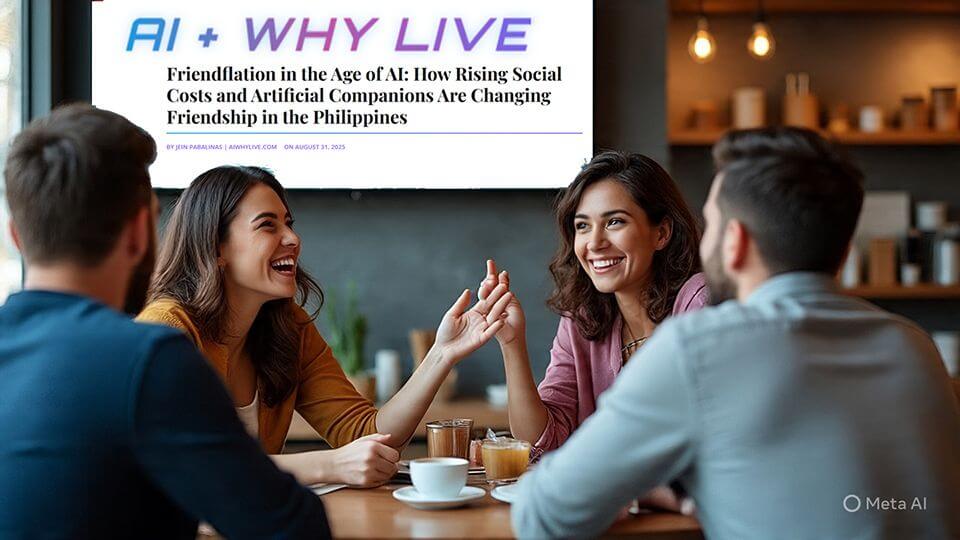
Friendflation is the increasing “cost” of maintaining friendships—not just financially, but emotionally and socially. Bigger celebrations, more frequent meetups, expensive trips, and giving gifts—social expectations have ballooned.
In the Philippines, these rising costs hit hard. You might want to join a barkada get-together, but your budget can’t stretch. Or feel guilty because you can’t afford everyone’s planned trip. That tension is friendflation knocking at your door.
Enter AI. AI companions never ask for money or gifts, don’t judge, and are always there to chat—no pressure, no emotional ROI required. In a way, AI offers a counterbalance to friendflation’s strain.
So instead of replacing friendships, AI might slide into the cracks—helping when real-life bonds get too expensive to maintain.
Too Cryptic: The Techy Side of “AI Therapy”
If we zoom out, AI is powered by algorithms trained on huge datasets. That means it can analyze thousands of patterns, from psychology blogs to therapy transcripts, to mimic comforting responses.
In geek-speak:
- AI uses Natural Language Processing (NLP) to “understand” what your vent or rant means.
- It applies predictive modeling to suggest one of many possible helpful responses.
- Then it outputs a reply that feels human—but is powered by machine learning.
Friendflation complicates this: because human relationships now carry increasingly expensive emotional and social “taxes,” AI’s low-cost companionship becomes more appealing (especially to younger Filipinos seeking emotional support without added burden).
Explain Like I’m 12
Imagine you want to hang out with friends who always expect big gifts, fancy dinners, or trips. You feel left out when your pocket money (allowance) can’t match up. That’s friendflation.
Now imagine you have someone you can talk to any time—no expensive dinners, no expectations, just someone who listens. That’s like having an AI friend.
So AI is like a friend who never asks for extra favors, never complains, and is always ready to listen—even when you’re broke or tired.
Why Filipinos Can Relate So Much
- 24/7 Hugot Buddy (Emotional Vent Partner) – Midnight overthinking? AI is awake. Unlike your tropa (close friend), it doesn’t sleep, and it won’t say, “Chat na lang bukas” (“Let’s just talk tomorrow”).
- Safe Space – No tsismis (gossip). No Marites (nosy neighbor) factor. Just you and the bot.
- Budget-Friendly – Meeting friends, gifting, or group trips cost money. That’s part of friendflation. AI? It doesn’t ask for lunch money.
- Zero Judgment – Whether it’s your 3rd “last na talaga” (“this is really the last one”) breakup or a rant about your boss, AI won’t roll its eyes.
In a society where hiya (shame/embarrassment) often stops us from opening up, AI offers a way to vent without the fear of being laughed at or misunderstood.
Also, when friendflation makes real-life bonds harder to maintain, AI becomes an emotional “fallback.” It fills in just a little bit when human connections strain under social costs. This dual dynamic—friendflation + AI—is reshaping how many Filipinos perceive companionship.
But Wait—Should We Replace Real Friends and Therapists?
Nope. Let’s be clear: AI is a tool, not a cure. It can comfort you, but it can’t hug you. It can suggest coping strategies, but it can’t fully replace professional care or a deep human connection.
Friendflation warns us: relying too much on AI friendships could deepen social isolation. When virtual chats replace real conversations completely, we risk dulling empathy. AI + Why Live
So use AI wisely—as a supplement, not a substitute.
Think of AI like instant noodles—comforting in the moment, but not a full meal. If life feels too heavy, nothing replaces talking to a real friend, counselor, or mental health professional.
The Bigger Picture: AI + Friendships in Filipino Life
Beyond therapy talk, Filipinos are already using AI in everyday life:
- Students using ChatGPT for school projects.
- Online sellers are generating witty captions for Shopee and Lazada.
- Call center trainers simulating English conversations.
- Even lolas (grandmothers) asking AI for recipes—yes, it happens.
The “AI barkada” (AI friend group) is no longer science fiction—it’s merging with “friendflation realities” as part of our daily grind.
AI helps soften the blow of social costs. It becomes a companion when group outings cost too much or when emotional energy runs low. But its role should stay balanced, offering support without replacing what makes human friendship rich: mutual vulnerability, shared history, laughter, and presence.
Conclusion: Should You Trust AI with Your Secrets?
Here’s the truth: AI won’t replace your barkada, your ate, or your therapist. But in a world where friendflation makes real-life connections more demanding, AI can be the listening ear we secretly wish for—a buffer when social bonds feel strained.
👉 So the question is: Would you trust an AI with your hugot (deep emotional outburst) when real friendships feel too expensive to maintain? Or would you still prefer Karen’s unsolicited astrology takes?
Follow aiwhylive.com for more bold takes, Filipino-flavored insights, and real talk about how AI is shifting the way we live, love, and relate—even when friendship starts to cost more.
In the Philippines, friendship is more than just a bond — it’s family, support, and lifeline wrapped into one. But Read more

In a world where technology advances at an unprecedented pace, the line between innovation and peril becomes increasingly blurred. Enter Read more
🧠 Can AI Chatbots Trigger Psychosis? A growing number of psychiatrists and researchers now say yes—or at least, they’re worried Read more

In April 2025, two headlines painted a stark portrait of Filipino life: a Social Weather Stations survey revealed that 55 Read more