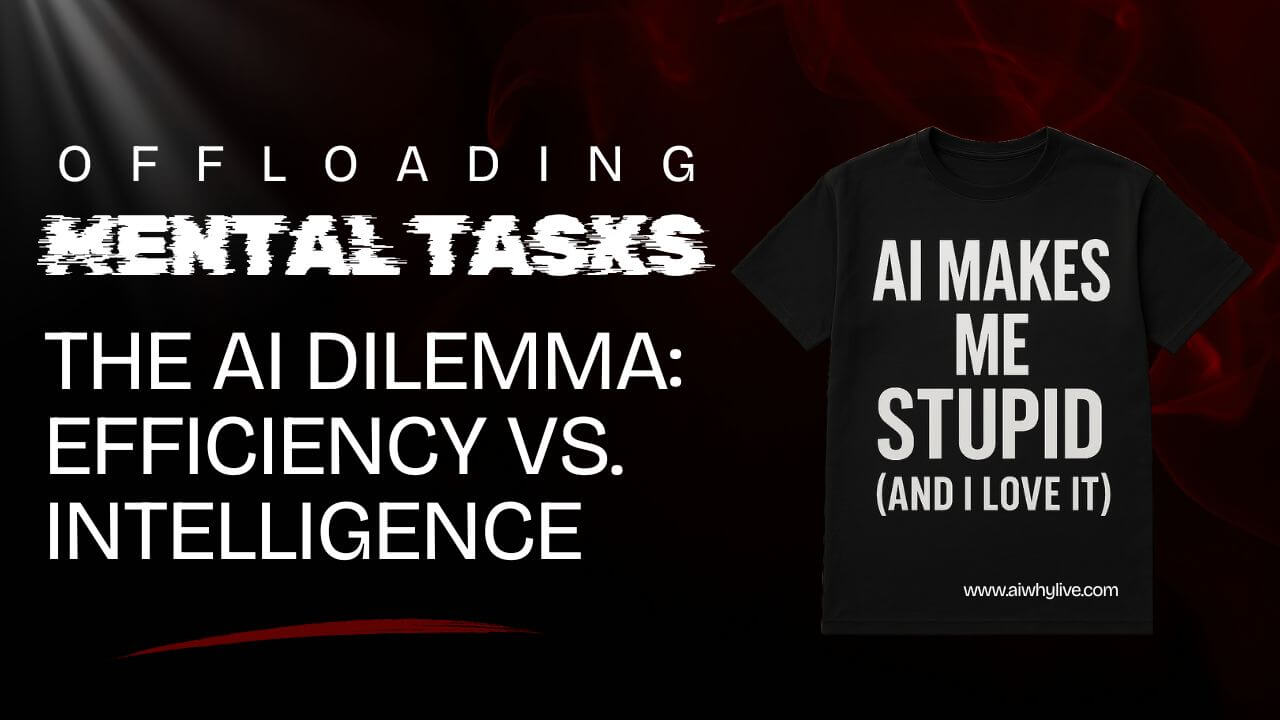
The AI Dilemma: Efficiency vs. Intelligence
A recent MSN article explores a growing concern—are we offloading too many mental tasks to AI, and is it making us less intelligent? The report highlights how professionals, from programmers to researchers, are becoming increasingly dependent on AI tools like ChatGPT and Copilot. While these tools boost efficiency, they also raise an unsettling question: Are we trading critical thinking for convenience?
But let’s flip the narrative. If AI allows us to be stupid but productive, is that really a bad thing? After all, history has shown that technological advancements often spark similar fears. When calculators were introduced, educators worried that students would lose their ability to perform basic arithmetic. Fast forward to today—calculators are indispensable, and no one questions their role in making life easier.
So, in the AI era, should we really be afraid of cognitive offloading, or should we embrace it as the next step in human evolution?
The Case for AI-Assisted Productivity
🔹 Efficiency Over Mental Strain – AI eliminates repetitive tasks, allowing professionals to focus on higher-level thinking. Instead of memorizing syntax, programmers can focus on problem-solving. Instead of manually sorting data, analysts can interpret insights faster.
🔹 Cognitive Offloading Isn’t New – Writing things down, using calendars, and relying on calculators are all forms of cognitive offloading. AI is simply the next iteration of this process—helping us manage complex tasks without unnecessary mental strain.
🔹 Creativity Thrives When AI Handles the Mundane – When AI takes care of routine work, humans can channel their energy into innovation. Writers can focus on storytelling rather than grammar rules. Engineers can design solutions rather than manually crunch numbers.
The Fear of AI-Induced Stupidity
Critics argue that excessive reliance on AI could erode critical thinking skills. Studies suggest that the more people trust AI to perform tasks, the less they engage in independent problem-solving. This phenomenon, known as cognitive offloading, has been linked to reduced memory retention and analytical reasoning.
But here’s the counterpoint: Does it matter?
If AI enables us to achieve more with less effort, why should we resist it? The goal isn’t to prove how much we can memorize—it’s to maximize our impact.
The Future: Smart Adaptation Over Fear
Instead of fearing AI-induced stupidity, we should focus on smart adaptation:
✅ Use AI as a Tool, Not a Crutch – AI should enhance thinking, not replace it. The key is knowing when to rely on AI and when to engage in deep problem-solving.
✅ Balance Automation with Learning – Just as calculators didn’t eliminate math education, AI shouldn’t replace foundational skills. Schools and workplaces must integrate AI responsibly, ensuring that critical thinking remains a priority.
✅ Embrace AI for Growth, Not Laziness – AI should be leveraged for efficiency, but not at the cost of intellectual stagnation. The best approach is to use AI strategically, allowing it to handle repetitive tasks while humans focus on creativity and innovation.
AI Isn’t Making Us Stupid—It’s Making Us Efficient
The debate over AI and cognitive offloading echoes past technological shifts. Just as calculators revolutionized math without destroying intelligence, AI is transforming productivity without eliminating critical thinking.
In the end, the question isn’t whether AI makes us lazy—it’s whether it empowers us to do more with less effort. If AI allows us to be stupid but productive, isn’t that better than being smart but stagnant?
And let’s take it further. Whether solving a problem manually, using a spreadsheet, or relying on AI, the outcome remains the same: effective solutions. When calculators first emerged, educators questioned their necessity, but they proved invaluable. Fast forward to the AI era: if technology makes us more efficient, nurtures better students, and enables effective teaching for a better world, why not embrace it?
Why live here? Proudly stupid every day! AI builds my tables, fields, and does most of the coding for my EMR. But what makes me more stupid than the rest? I use more AIs—I optimize, automate, and adapt like no one else. And that, ironically, is the smartest move of all. I am AI Why Live indeed! 🚀
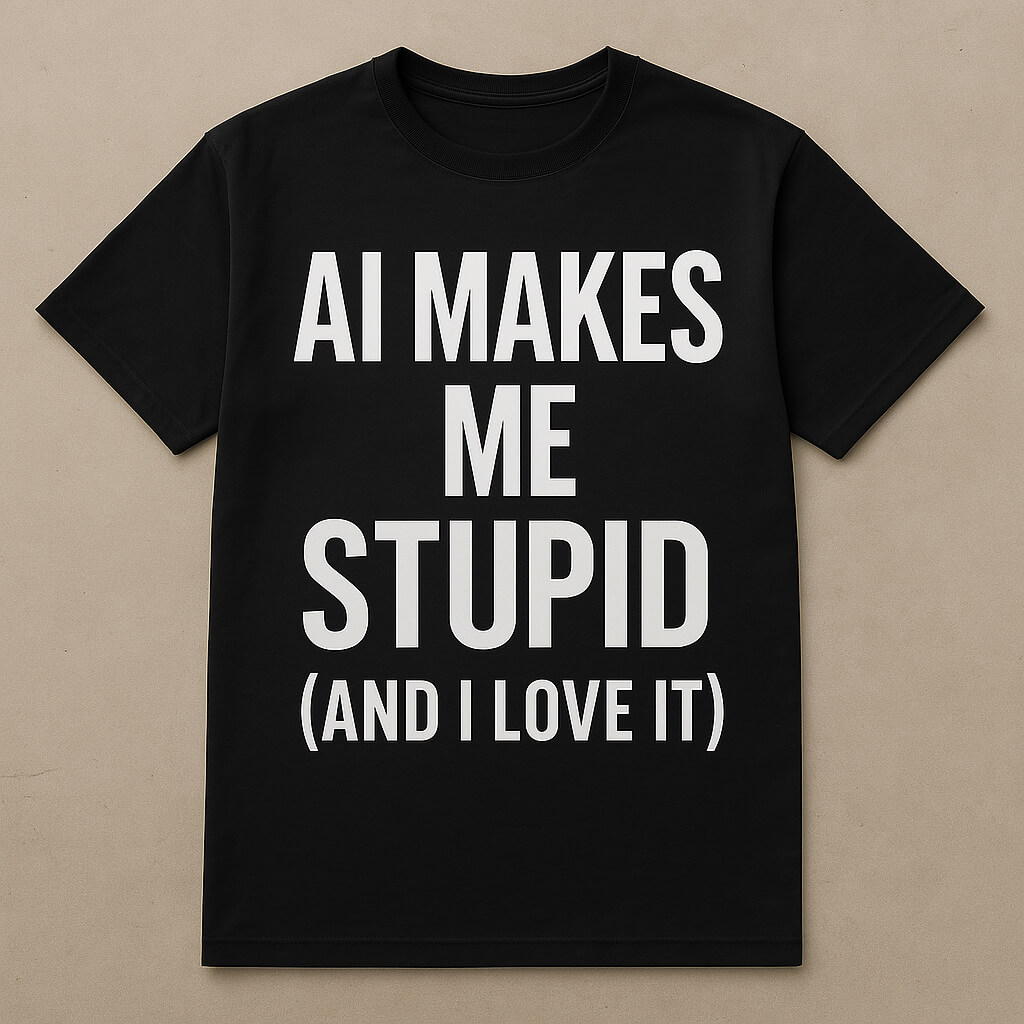
Oh, and speaking of bold, unapologetic energy—FREE “Stupid and Proud – AI Why Live!” T-Shirts are coming soon! Wear it loud, wear it proud, and let the world know that being AI-powered isn’t about laziness—it’s about making things happen.

And while I proudly carry the “STUPID” imprint, my true goal is simple: to be smarter than I was yesterday—to learn, evolve, and push boundaries with AI as my catalyst. Because intelligence isn’t about knowing everything—it’s about knowing more than you did before, embracing growth, and turning possibility into progress.
At AIWhyLive.com, we don’t just talk about AI—we live it, we challenge it, and we thrive with it. 🚀🔥
Sources:
- MSN Article: “We’re offloading mental tasks to AI. It could be making us stupid.”
- Research on Cognitive Offloading: Studies on AI’s impact on critical thinking and productivity.

A recent Yahoo! Finance report spotlighted a controversy in U.S. higher education—a college student demanded a tuition refund after discovering Read more

The rapid evolution of technology, driven by AI and automation, is reshaping the global workforce. In this exciting era, new-collar Read more
The Illusion of Equality In the Philippines, the concept of equality often feels like a distant dream, especially when it Read more