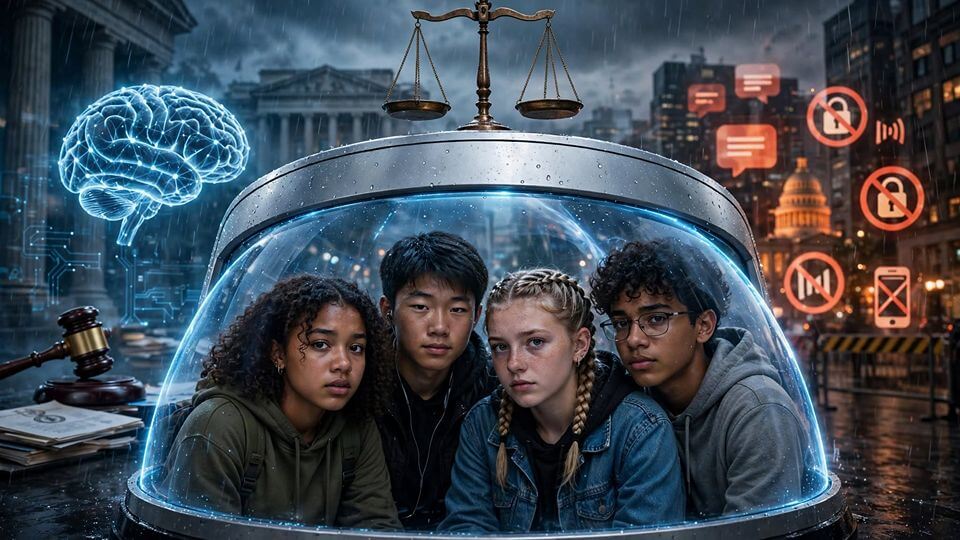
While big tech companies face massive legal heat abroad for putting teenagers at risk, local politicians here want to ban kids from social media entirely. Both solutions completely miss how young people actually live online.
The Global Tech Mess Meets Local Politics
If you're a Grade 12 student or a young college freshman in the Philippines right now, your entire life runs through your phone. From group projects on Messenger and TikTok trends to homework help from AI chatbots, the internet isn't just an accessory—it's where your world happens.
But the adults in charge are currently panicking.
Abroad, major AI developers like OpenAI are facing intense legal battles and lawsuits filed by multiple U.S. states over allegations that unregulated AI chat companions failed to protect vulnerable teens, leading to severe mental health crises and self-harm risks.
Right here at home, our own lawmakers in Congress and the Senate have been debating aggressive bills to restrict or outright ban minors from having social media accounts. The goal is to stop cyberbullying, curb severe screen addiction, and protect student mental health.
It sounds simple enough on paper. But for anyone actually navigating student life today, these clumsy top-down bans feel completely disconnected from reality.
🧠 AIWhyLive Explains — Reactive Institutional Panics
Reactive institutional panics happen when governments and corporations respond to systemic digital addiction and algorithmic harm using blunt instruments—such as sudden court lawsuits or blanket age-restriction bans—instead of fixing the predatory engagement models built into software products by design.
Why Blanket Bans Drive Teens Underground
Let's be completely real: telling Filipino teenagers they aren't allowed to use social media or chat apps doesn't stop them from using them.
It just teaches them how to lie about their birthdates, use hidden apps, and turn on VPNs so parents and teachers have zero visibility into what they are doing online.
When tech platforms build hyper-addictive feeds and emotional AI chatbots designed to mimic human friendship, a government warning sign won't fix it. Big tech companies treat minor fines as a tiny cost of doing business while keeping their engagement loops running 24/7.
We are stuck in a cycle where tech giants profit off youth isolation, courts sue them *after* tragedies happen, and politicians propose impossible bans instead of teaching genuine digital survival skills.
🍗 Lechon Manok — Real Life vs. Screen Fatigue
Picture this.
You spend all day scrolling through heavy news about international tech lawsuits, data privacy scandals, and local Senate hearings proposing strict internet bans for minors.
Your brain is completely fried from reading about algorithms, safety filters, and cyber policies.
Then you step away from your phone, head down to your favorite local spot in Bacolod, and grab dinner with your family over a plate of hot, crispy *lechon manok*.
For an hour, nobody is checking notifications, no chatbot is pretending to be your best friend, and actual human conversations take over.
That is the best reminder we can get: no government law or corporate safety disclaimer can ever replace real, face-to-face community and family support.
🐘 Elephant in the Room — Who Should Really Be Held Accountable?
Let's address the uncomfortable truth:
Blaming teenagers for getting addicted to apps or relying on AI companions is shifting the blame away from the companies that engineered these platforms to be addictive in the first place.
If tech platforms design products that exploit young, impressionable minds for ad revenue and data harvesting, passing laws that punish the users instead of regulating the software developers is entirely backward.
Navigating the Digital World Safely
Surviving the modern tech landscape as a student or young adult doesn't mean throwing away your devices or waiting for politicians to save the internet. It means building personal boundaries:
- Don't Confuse Code with Compassion: Remember that AI chatbots do not have feelings, souls, or real empathy. Never treat a machine as a substitute for real friends, family, or professional mental health support.
- Protect Your Private Data: Be extremely careful about what personal thoughts, photos, and private struggles you feed into free AI tools and social media algorithms.
- Build Real-World Escapes: Make time for offline hobbies, sports, and face-to-face hangouts so your life isn't entirely trapped inside a glowing screen.
- Talk Openly: If you or someone you know is feeling overwhelmed, burned out, or struggling mentally, talk to a trusted adult, counselor, or real human friend instead of venting to an app.
👦 ELI12 — The Fast-Food Trap
Imagine a fast-food restaurant that invents a super-addictive candy that makes kids never want to leave their seats or eat real food.
When kids start getting sick, the restaurant owners just put up a sign saying "Kids under 18 aren't allowed," but they keep the candy machine running full blast at the back door.
Instead of changing the recipe of the candy, all the adults just stand outside arguing about who is allowed to walk through the front door.
That is what the current debate over youth tech safety looks like.
📝 Note from the Webmaster
📝 A Note from the Webmaster — AIWhyLive
Let's keep it 100. I love digital tools. Sure, AI makes me stupid—and I absolutely love it when it quickly cleans up my messy database logs. But when it comes to the mental health and safety of our youth, automated gimmicks and unregulated apps cross a dangerous line. Let's stop relying on corporate apologies and clumsy legislative bans, and start building real-world resilience.
The Bottom Line
Whether it's lawsuits against AI giants in the West or social media ban proposals in the Philippines, the core problem is clear: technology should serve human well-being, not exploit it.
Keep your boundaries sharp, look out for your peers, and don't let algorithms run your life.
Explore our archives at aiwhylive.com for more human-first insights on tech culture.