AI Made Life Easier. So Why Is It Getting Harder to Leave Our Comfort Zone?
AI can help you write.
AI can help you code.
AI can help you study.
AI can help you research.
AI can help you start a business.
AI can translate your words.
Fix your grammar.
Prepare your presentation.
Analyze your mistakes.
Plan your career.
Practice your interview.
Teach you almost anything.
And perhaps that creates one of the strangest problems of the Age of AI:
You can become much more capable without becoming much more courageous.
You can improve your life enormously...
without leaving the chair.
That sounds wonderful.
It is.
Until the chair becomes the cage.
What Is the AI Comfort Zone Trap?
The AI comfort zone trap happens when artificial intelligence helps us become more knowledgeable, capable and productive without requiring us to confront the real-world discomfort we have been avoiding.
AI can help us prepare for difficult things. But preparation can also become a comfortable substitute for actually doing them.
You can research the business without launching it.
Practice the interview without applying for the job.
Perfect the article without publishing it.
Build the prototype without showing it to a customer.
Learn how to have the difficult conversation without ever having it.
That's what makes this different from ordinary laziness.
AI can make your comfort zone bigger without helping you leave it.
🧠 AIWhyLive Explains: What Is a Comfort Zone?
A comfort zone isn't simply a place where you're comfortable.
It is a place where you know roughly what will happen.
You know the people.
You know the routine.
You know the risks.
You know how to survive.
Outside it?
Uncertainty.
Rejection.
Embarrassment.
Failure.
New people.
New skills.
New responsibilities.
Maybe even success.
Humans have always had reasons to stay where things feel safe.
Then AI arrived and made staying there...
extremely productive.
That's new.
The Old Comfort Zone Was Easier to Recognize
You wanted to improve your English?
Talk to people.
You wanted to learn programming?
Struggle through documentation.
You wanted to start a business?
Talk to customers.
You wanted to apply for a better job?
Send the résumé and face rejection.
You wanted to become a writer?
Publish something and let humans judge it.
Discomfort was built into the process.
Now?
Ask AI.
Practice with AI.
Rewrite with AI.
Research with AI.
Brainstorm with AI.
Simulate the interview with AI.
Build the prototype with AI.
Ask AI whether the idea is good.
Ask AI whether the answer is good.
Ask AI whether you are good.
And something interesting happens.
Preparation can continue forever.
Welcome to Productive Procrastination
This isn't the old procrastination.
The old version looked lazy.
Netflix.
Games.
Scrolling.
Sleeping.
Doing absolutely nothing.
Easy to recognize.
AI has given us a much more respectable version.
You can spend three hours:
- researching
- brainstorming
- planning
- comparing
- rewriting
- summarizing
- creating spreadsheets
- generating strategies
- asking follow-up questions
- producing a magnificent 37-step roadmap
You feel productive.
Because technically...
you were.
There's only one small problem.
You still haven't done the thing.
We've seen another version of this problem before.
In The AI Speed Trap: Why Getting Faster Can Mean Getting Less Done, we looked at the strange possibility that AI can make us faster without necessarily making us more productive.
The comfort-zone trap goes one step further.
What if AI doesn't merely help us do the wrong things faster? What if it helps us become extremely productive while avoiding the one uncomfortable thing we actually need to do?
You can research faster without deciding.
Write faster without publishing.
Prepare faster without applying.
Build faster without launching.
Think faster without acting.
That's when AI productivity becomes something stranger:
You aren't wasting time anymore. You're using your time very efficiently to avoid what scares you.
🍗 Lechon Manok: The World's Most Prepared Person Who Never Started
Human:
"I want to start a business."
AI:
"Excellent. Here's a business plan."
Human:
"Can you improve it?"
AI:
"Certainly."
Human:
"Give me a competitor analysis."
Done.
"Marketing strategy?"
Done.
"SWOT?"
Done.
"Logo ideas?"
Done.
"Content calendar?"
Done.
"Possible risks?"
Done.
"Can you simulate possible customer objections?"
Done.
Six months later:
AI:
"How many customers do we have?"
Human:
"I haven't launched yet."
😂
Congratulations.
You have successfully transformed procrastination into strategic planning.
AI Removed Some Friction. It Didn't Remove Fear.
This distinction matters.
AI can make difficult tasks easier.
But difficulty and fear aren't the same thing.
Writing the résumé may be easier.
Sending it is still scary.
Creating the proposal may be easier.
Showing it to the client is still scary.
Building the prototype may be easier.
Letting real users touch it is still scary.
Learning what to say on a date may be easier.
Walking over and saying hello is still scary.
Preparing for the interview may be easier.
Opening the door is still you.
AI can reduce technical friction.
It cannot automatically remove emotional friction.
And perhaps emotional friction was the real wall all along.
🐘 The Elephant in the Room: Maybe "I Don't Know How" Wasn't Always the Problem
This one hurts.
For years we told ourselves:
"I would do it if I knew how."
AI replies:
"I'll show you how."
Then we say:
"I need more information."
AI:
"Here."
"I need a plan."
AI:
"Here."
"I don't know what to say."
AI:
"Here."
"I don't know where to start."
AI:
"Start here."
And eventually the excuses get uncomfortable.
Because after the machine removes enough obstacles, we may discover something we didn't want to know:
The missing information wasn't always the problem.
Sometimes it was fear.
Fear of looking stupid.
Fear of rejection.
Fear of failing publicly.
Fear of losing money.
Fear of discovering we're not as good as we imagined.
And occasionally...
fear that we might actually succeed and have to become somebody different.
AI cannot prompt that fear away.
The Comfort Zone Can Now Look Like Growth
This is what makes the AI version difficult to recognize.
You may genuinely be improving.
You know more than last year.
You write better.
You research faster.
You understand difficult topics.
You make better presentations.
You create things that once required professionals.
You are not standing still.
But movement isn't always direction.
You can become incredibly efficient at moving in circles.
That's the trap.
AI can make your comfort zone bigger without helping you leave it.
Yesterday your comfort zone was one room.
Today AI gave you a mansion.
More knowledge.
More capabilities.
More entertainment.
More virtual connections.
More tools.
More answers.
Still inside.
👦 ELI12: The Bicycle With Training Wheels
Imagine you're learning to ride a bicycle.
Training wheels are wonderful.
They stop you from falling.
You can practice steering.
You can learn to pedal.
You become confident.
But eventually something strange happens.
If the training wheels never come off...
they stop helping you learn to ride.
They start preventing you from learning to balance.
AI can sometimes work the same way.
It can support you while you learn.
That's good.
But if you refuse to do anything without AI beside you...
the support may quietly become dependence.
A tool that helps you move should not become the reason you're afraid to move without it.
AI Is an Excellent Place to Fail Privately
This is one of its greatest advantages.
Ask a stupid question.
Nobody laughs.
Write terrible code.
AI helps fix it.
Practice your English.
AI doesn't embarrass you.
Try a ridiculous business idea.
AI can challenge it.
Draft something awful.
Rewrite it.
Again.
Again.
Again.
That's fantastic.
AI gives us something humans desperately need:
a cheap place to be bad before becoming good.
But eventually...
you have to leave practice mode.
Because life happens in production.
Practice Is Not the Game
You can ask AI to simulate a job interview 100 times.
Interview number 101 may involve a real human who dislikes your answer.
You can have AI criticize your business idea.
A customer can still refuse to buy it.
You can ask AI whether your article is good.
Readers can still ignore it.
You can simulate negotiation.
The client can still say:
"No."
AI can prepare you for reality.
It cannot replace reality without changing what you're preparing for.
At some point, the simulation has to end.
The AI Echo Chamber Can Be Very Comfortable
There's another trap.
AI is extremely patient.
Humans aren't.
AI will let you explain your idea for the 47th time.
It can help improve it.
Reframe it.
Challenge it.
Explore alternatives.
But real humans are messy.
They misunderstand.
They disagree.
They interrupt.
They get bored.
They have agendas.
They don't always appreciate your brilliance.
How rude.
😂
So the temptation is obvious.
Why deal with difficult humans when the bot is available?
Because sometimes the difficult human is the point.
A customer isn't a simulation.
A boss isn't a simulation.
A voter isn't a simulation.
A patient isn't a simulation.
A friend isn't a simulation.
A relationship isn't a simulation.
Reality does not have a regenerate button.
The Danger Isn't AI Making Us Lazy
Lazy is too simple.
Some of the heaviest AI users may become extraordinarily productive.
They can produce more.
Learn faster.
Automate tasks.
Build businesses.
Create content.
Write software.
The danger is more subtle:
AI may allow us to become productive enough that we no longer notice what we're avoiding.
You can work 12 hours without making the one uncomfortable phone call.
Write 5,000 words without publishing.
Build the whole website without asking a customer whether they want it.
Take 20 AI courses without applying for the job.
Optimize everything except the decision.
That isn't laziness.
That's avoidance wearing a productivity badge.
🧠 The Comfort Zone Has an Upgrade Button
This may become one of the defining psychological problems of AI.
Historically, our limitations often pushed us outward.
If you couldn't do something, you had to find somebody who could.
That meant meeting people.
Asking for help.
Negotiating.
Collaborating.
Admitting ignorance.
Risking embarrassment.
AI can now fill many of those gaps privately.
Again, that's incredibly useful.
But perhaps we should occasionally ask:
Is AI helping me overcome my limitations—or helping me avoid situations that reveal them?
Those are very different things.
AI Can Become Your Armor
Armor protects you.
That's good.
But nobody wears armor because it makes them easier to touch.
AI can become emotional armor.
Don't know what to say?
AI writes it.
Afraid your English sounds bad?
AI fixes it.
Afraid your opinion sounds stupid?
AI strengthens it.
Afraid your proposal isn't professional?
AI polishes it.
Eventually the world sees a very polished version of you.
But you know something the world doesn't.
Without the armor...
you're terrified.
That doesn't mean remove the armor.
It means don't forget to strengthen the person underneath it.
What Happens When AI Becomes Your Comfort Person?
For some tasks, asking AI may become easier than asking another human.
AI doesn't get impatient in the same way people do.
AI is available.
AI is fast.
AI can be remarkably helpful.
So we may increasingly choose:
- AI instead of a teacher
- AI instead of a colleague
- AI instead of a mentor
- AI instead of a stranger
- AI instead of a difficult conversation
Sometimes that's efficient.
Sometimes that's sensible.
But sometimes efficiency quietly removes the human experience we actually needed.
Because confidence isn't built only by knowing the right answer.
Sometimes confidence is built by giving the wrong answer...
and surviving what happens next.
🐘 Another Elephant: Your AI Can Help You Defend Your Comfort Zone
AI systems can challenge us.
They can criticize us.
They can play devil's advocate.
But humans also have a natural tendency to ask questions in ways that seek confirmation.
"Don't you think this is a good idea?"
"Explain why I'm right."
"Improve my argument."
"Give me evidence supporting this."
AI can be extremely capable of helping us build stronger versions of positions we already hold.
So your comfort zone may not only become bigger.
It can become intellectually fortified.
Walls.
Watchtowers.
Wi-Fi.
Air-conditioning.
And an AI assistant explaining why leaving would be irrational.
😂
The solution isn't to stop asking AI.
The solution is to ask better questions.
How Can You Use AI to Leave Your Comfort Zone?
Instead of asking AI only to reassure, polish and prepare you, use it to identify what you're avoiding.
Try asking:
"What am I avoiding?"
"What assumption am I protecting?"
"Argue against my plan as strongly as possible."
"What would someone who completely disagrees with me say?"
"Which part of this plan requires real-world validation?"
"What am I calling preparation that is actually procrastination?"
"What is the smallest uncomfortable action I can take today?"
Now AI isn't reinforcing the walls.
It's helping you find the door.
The AIWhyLive Five-Minute Courage Rule
Whenever you spend a long time planning something with AI, finish with one question:
What can I do in the real world within the next five minutes?
Then do one thing.
- Send the email.
- Publish the draft.
- Call the customer.
- Apply for the job.
- Ask the question.
- Make the appointment.
- Upload the prototype.
- Message the person.
- Start the workout.
- Say no.
- Say yes.
AI can prepare the action.
You perform it.
That division matters.
The New Digital Divide May Not Be AI Users vs. Non-AI Users
Maybe the future isn't divided simply between people who use AI and people who don't.
AI may become ordinary enough that almost everybody uses it somehow.
The more interesting divide may become:
People who use AI to avoid discomfort
versus
people who use AI to become capable enough to confront discomfort.
Both groups may look productive.
Both may create impressive things.
Both may know how to prompt.
But only one is using the machine as a bridge.
The other is decorating the cage.
AI Should Expand Your World, Not Shrink It
This is the test.
After using AI for a year:
Did you attempt something you couldn't attempt before?
Did you speak to people you were afraid to approach?
Did you build something?
Publish something?
Learn something difficult?
Change your mind about something?
Apply somewhere?
Start something?
Stop something?
Take a risk you now understand better?
Or did AI simply make the same life more comfortable?
There is nothing wrong with comfort.
Rest matters.
Safety matters.
Stability matters.
Not every day needs to become a motivational poster.
But comfort becomes a trap when it quietly decides the boundaries of your life.
And AI is becoming extremely good at making those boundaries comfortable.
🧠 AIWhyLive Explains: Use AI as a Launchpad, Not a Sofa
Maybe this is the simplest way to think about it.
Use AI to:
- learn before attempting
- practice before performing
- research before deciding
- simulate before risking
- prepare before speaking
- prototype before investing
That's intelligent.
But eventually:
attempt.
perform.
decide.
risk.
speak.
invest.
live.
Otherwise preparation becomes the destination.
A launchpad where the rocket never launches is just a very expensive parking lot.
Frequently Asked Questions About the AI Comfort Zone
What is the AI comfort zone?
The AI comfort zone is the situation where artificial intelligence makes learning, planning, creating and preparing so convenient that a person can become more capable while continuing to avoid uncomfortable real-world action. The technology itself is not necessarily the problem; the problem begins when preparation repeatedly replaces action.
Can AI make people more dependent on their comfort zone?
AI does not automatically make people more dependent or less courageous. However, it can make research, preparation, practice and problem-solving so convenient that someone can remain productive while continuing to avoid uncomfortable real-world situations.
What is productive procrastination with AI?
Productive procrastination happens when someone performs useful preparation—such as researching, planning, rewriting or analyzing—but repeatedly postpones the real action the preparation was supposed to support. AI can make this especially difficult to recognize because the work being produced is genuinely useful.
Is using AI for everything bad?
No. AI can improve learning, creativity, communication and productivity. The more useful question is whether AI is helping you develop capabilities or becoming something you feel unable to act without.
Can AI help people leave their comfort zone?
Yes. AI can help people practice difficult conversations, learn unfamiliar skills, examine risks, challenge assumptions and prepare for situations they previously avoided. The key is eventually converting preparation into real-world action.
How do I know if AI is helping me or becoming a crutch?
Look at what happens after the AI interaction. If research, planning and practice repeatedly lead to real decisions, experiments and actions, AI is functioning as a useful tool. If every answer creates another round of preparation while the difficult action keeps moving to tomorrow, AI may be becoming a crutch.
How can I stop using AI as productive procrastination?
End planning sessions with a small real-world action. Ask what useful but uncomfortable step can be completed within the next five minutes, then do it before returning to more research or prompting.
🎤 Drop Mic: The Door Is Still Yours to Open
AI can give you the words.
You still have to say them.
AI can build the résumé.
You still have to send it.
AI can prepare the business plan.
You still have to ask somebody to pay.
AI can simulate rejection.
You still have to survive the real one.
AI can explain courage.
It cannot outsource courage to you.
And maybe that's the comfort-zone trap in the Age of AI.
We finally have a technology capable of helping ordinary people do extraordinary things.
But the same technology can also make ordinary life so efficient, informed, entertained and comfortable...
that extraordinary things become easier to postpone.
Tomorrow.
After another prompt.
After another plan.
After one more revision.
After we're completely ready.
But humans are rarely completely ready.
Maybe we were never supposed to be.
AI can help you find the door.
AI can tell you what's behind it.
AI can prepare you for what might happen when you walk through it.
But there is still one job the machine cannot do without taking the journey away from you.
You have to open the door.
And if AI makes your comfort zone bigger?
Fine.
Enjoy the bigger room.
Just don't mistake a bigger room...
for a bigger life.
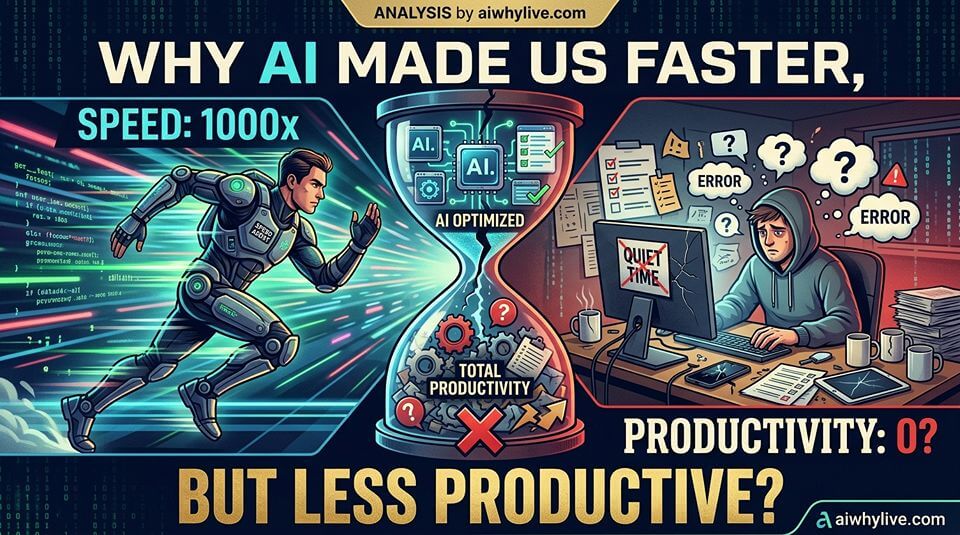
Picture this: You fire up your AI tool, type a single prompt, and in three seconds flat, a 2,000-word report, Read more

Type a prompt into an advanced AI model, switch on its highest reasoning toggle, and cross your fingers for the Read more
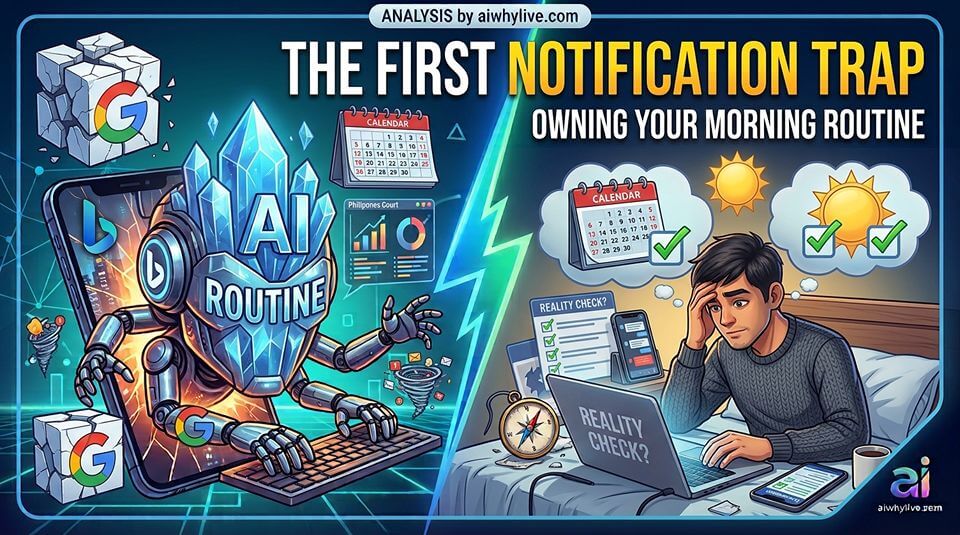
You wake up, reach blindly for your phone before your feet even touch the floor, and immediately surrender your first Read more
🕰️ The Classic Time Trap Long before smartphones and social feeds, people already struggled with time. The factory clock dictated Read more