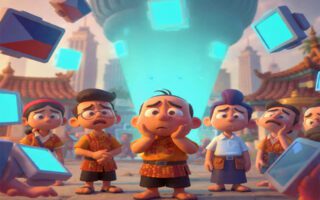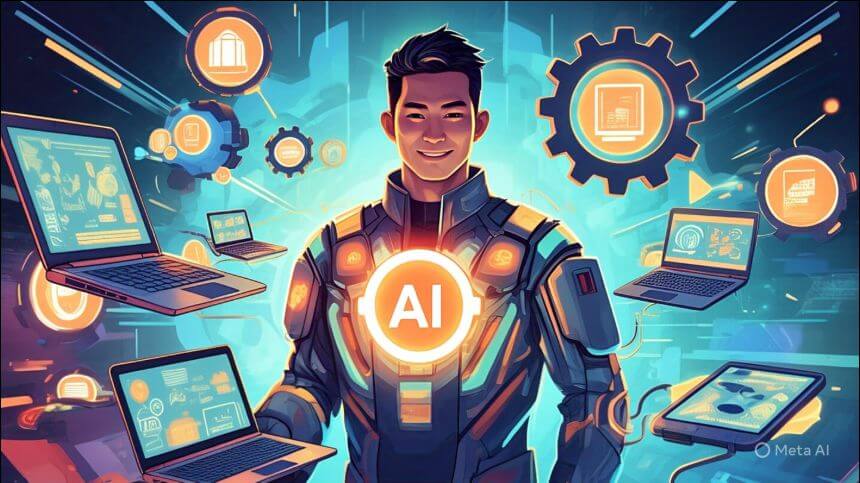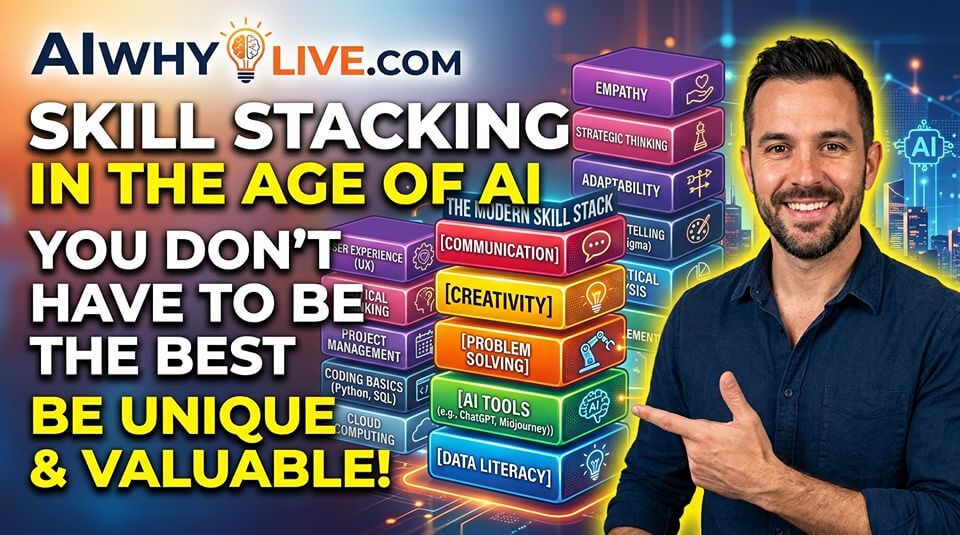
Last time I checked, you're not a zombie. So why are you living like one?
There is something I find increasingly difficult to understand.
We complain that there is no opportunity. Then we spend hours watching other people's opportunities. We complain that we don't know how to start. Then we spend another hour scrolling. We say we want to learn a skill. Then we watch somebody else demonstrate it. We say we want to build a business. Then we consume ten videos about somebody else's business. We say we don't have enough time. Then somehow we find three hours for doom scrolling.
At some point, we have to stop blaming the algorithm.
Maybe the algorithm isn't the only thing controlling the screen. Maybe... we are.
🧟 Last Time I Checked, You're Not a Zombie
I'm using the word deliberately. Not as an insult. As a warning.
A zombie doesn't build. It wanders. It consumes. It follows. It reacts. It moves toward whatever catches its attention.
Now look at the modern doom scroller. Swipe. Watch. Swipe. Watch. Laugh. Anger. Swipe. Share. Swipe. Watch. Repeat.
Different creature? Perhaps. Different behavior? I'm not so sure.
The uncomfortable part is that we choose to become zombies one swipe at a time.
🧠 AIWhyLive Explains: What Is Doom Scrolling?
Doom scrolling is when you keep scrolling through your phone even though what you're seeing is mostly bad news, scary stories, arguments, disasters, outrage, or depressing content.
You know you should stop. You don't. You scroll again. And again. And somehow, 20 minutes becomes an hour. The strange part? You may not even feel better afterward.
Think of it this way.
Imagine you're eating chips. You already know you're full. But there's another chip. So you eat it. Then another. Then another.
Doom scrolling is the digital version of eating one more chip—even when you know you should stop. Except the chips are headlines, videos, comments, arguments, rumors, and endless posts. And the algorithm keeps handing you another one.
"Here's something you'll probably hate." (Scroll)
"Here's something that will make you angry." (Scroll)
"Here's something else you absolutely need to see." (Scroll)
Suddenly, it's midnight. Your thumb got a workout. Your brain got a buffet. And you still haven't started the thing you said you wanted to do.
The Important Difference
Scrolling isn't automatically bad. You can learn from social media. You can laugh. You can connect with people. You can discover ideas.
The problem is when scrolling becomes the activity instead of the doorway to the activity.
- You wanted to learn baking. You watched 37 baking videos.
- You wanted to start a business. You watched 52 business videos.
- You wanted to learn AI. You watched another 83 videos about AI.
Congratulations. You have become an expert at watching people do things. But you haven't done the thing.
That's where doom scrolling becomes more than a social-media habit. It becomes a time problem. And eventually, a choice problem.
The question isn't simply, "How much are you scrolling?" The better question is: "What could you have built during that time?"
🍗 Lechon Manok: Training Certificate, Then What?
I've seen something else that deserves a little roasting.
People attend free training: soap making, baking, food processing, online selling, digital marketing, entrepreneurship, computer skills, livelihood programs. One seminar after another.
They receive certificates. They take photographs. They shake hands. They post: "Thank you for this wonderful opportunity!"
And then... what happens? Sometimes, nothing. The certificate goes into a folder. The training becomes a memory. The ingredients run out. The baking stops. The soap isn't made anymore. The business never starts. And eventually... back to scrolling.
I'm not saying free training is useless. Far from it. Learning is valuable. But a training certificate isn't a business. Knowing how to make soap isn't a livelihood until somebody actually makes and sells soap. Knowing how to bake isn't a business until something comes out of the oven. Knowing digital marketing isn't useful until you actually market something.
Learning without doing is entertainment wearing a graduation gown.
📱 Look at What You're Holding
Here's the part that makes me almost laugh.
You may already be holding something more powerful than the equipment available to many entrepreneurs a generation ago: a smartphone, internet access, a camera, a video editor, a design studio, a publishing platform, a global marketplace, and now... AI.
The same device you use to watch somebody else's life can help you build your own. Think about that. The phone isn't necessarily the problem. What you choose to do with it is.
🤖 Learn to Learn With AI
This is where I want AIWhyLive to be practical. Don't simply ask AI: "What can you do?" Ask: "What can I build?" That's a completely different question.
Suppose you want to sell homemade soap. Ask AI to help you research your target customers, create product names, draft a simple costing spreadsheet, write product descriptions, create a basic marketing plan, suggest packaging ideas, write your Facebook posts, and help answer customer questions.
You still have to make the soap. You still have to buy the ingredients. You still have to package it. You still have to sell it. But AI can help you cross the distance between "I want to" and "I started." That's leverage.
You Don't Know How to Code?
Good. Neither did many people who started using AI to build software. You don't have to become a software engineer overnight.
Start with a problem. Tell AI what you want. Let it explain the pieces. Try. Break something. Ask why it broke. Fix it. Try again.
Eventually, something happens. You stop being someone who is merely using AI. You become someone who builds with AI. That's the difference.
🎨 So You Learned to Make AI Images...
Congratulations. Seriously. That's a useful skill. But then what?
You learned how to generate beautiful images. Then you generated another. Then another. Then you posted them. Then you watched somebody else's AI-generated images. Then you watched an AI video. Then another. And suddenly... you've become a consumer of the very technology you could have used to create something.
The tool isn't the achievement. What you build with the tool is.
🎬 You Learned to Make AI Videos...
You discovered how to make clips. You created cinematic scenes. You made talking avatars. You experimented with voices. You generated music. Fantastic.
Now ask the uncomfortable question: What are you building with it? A business? A lesson? A documentary? A product? A story? A campaign? A portfolio? A useful channel? Something that solves a problem?
Or are you simply creating another piece of content for the algorithm to consume? There's nothing wrong with entertainment. I enjoy it too. But if every new AI capability ends with you returning to the same scrolling habit... AI didn't give you leverage. You gave the algorithm more content.
⏳ Time Cannot Make Your Time Matter
We often say: "Time is gold." I'm beginning to think that's incomplete. Time is only potential.
You receive 24 hours. So does the billionaire, the unemployed person, the student, the entrepreneur, the person waiting for opportunity. The clock doesn't care. But what you do with those hours changes everything.
- An hour spent learning can become a skill.
- An hour spent building can become a product.
- An hour spent talking to a customer can become a sale.
- An hour spent solving a problem can become a business.
- An hour spent doom scrolling becomes... another hour.
Time cannot make your time matter. Only you can.
🧒 Explain Like I'm 12
Imagine somebody gives you a magic toolbox. Inside are tools that can help you write, draw, calculate, design, research, build, and learn.
You have two choices: you can spend all day watching other people use their tools, or... you can open your toolbox, pick one, and build something. It doesn't have to be perfect. It just has to exist. That's AI.
The Poor Choice Nobody Wants to Talk About
This needs to be said carefully. Poverty is complicated. People face circumstances they did not choose: low wages, limited opportunities, family responsibilities, poor infrastructure, bad luck, economic conditions, and sometimes systems genuinely fail people.
But choices matter too. Not every difficult life is the result of a bad decision. Yet some bad decisions can make a difficult life harder.
If every opportunity becomes another certificate... if every free training becomes another forgotten lesson... if every smartphone becomes another scrolling machine... if every AI tool becomes another entertainment toy... then eventually we have to ask: What are we doing with what we already have?
That's not blaming people for being poor. It's asking whether we are making ourselves poorer in time, attention, skills, and opportunity through repeated choices.
The Government Can't Prompt for You
There will always be programs, training, assistance, seminars, projects, policies, and opportunities. Some will work. Some won't.
But here's something nobody can completely outsource: your decision to begin. A government program can provide training. A teacher can provide knowledge. A company can provide employment. AI can provide assistance. The internet can provide information. But nobody can force you to use them. At some point... you have to move.
And That's Where AI Gets Interesting
AI doesn't eliminate effort. It changes where effort goes.
Instead of spending three hours figuring out how to begin, you can ask AI for a roadmap. Instead of staring at a blank page, you can ask for ten starting points. Instead of being terrified of code, you can ask AI to explain it like you're twelve. Instead of paying somebody to create every first draft, you can create one yourself and improve it.
Instead of saying: "I don't know how," you can now say: "Teach me."
That may be one of the greatest opportunities AI has created. Not because AI knows everything (it doesn't, AI can be wrong), but because it can help you learn faster. And learning faster gives you something incredibly valuable: the courage to start.
The Doom-Scrolling Trap
Doom scrolling is especially dangerous because it doesn't feel like wasting time. You're "checking the news." You're "keeping up." You're "researching." You're "relaxing." You're "just looking."
Twenty minutes becomes an hour. An hour becomes two. Then tomorrow arrives. Same problems. Same dreams. Same screen. Same scrolling.
Meanwhile, someone else is using the same internet to learn how to build a website. Someone else is using AI to create a product. Someone else is learning a skill, writing, selling, or failing. And that last one matters: They are failing while building. That's still movement.
Stop Waiting for Motivation
Here's another uncomfortable truth. You don't need to feel motivated before starting.
Start badly. Start confused. Start with AI. Start with YouTube. Start with a notebook. Start with one customer. Start with one product. Start with one paragraph. Start with one line of code. Start with one hour.
The perfect moment is often just another excuse wearing better clothes.
Your AI Is Waiting
I sometimes wonder whether we are underestimating what is sitting inside our hands. AI can be your teacher, researcher, coding assistant, editor, brainstorming partner, translator, design assistant, business consultant, and tireless collaborator.
But it cannot do the most important part. It cannot decide to care about your future. That's still yours.
🎤 Drop Mic: What Now?
So here's the challenge. Tomorrow morning, before you start scrolling... build something.
Ask AI to teach you something you've always wanted to learn. Take the idea you've been postponing and turn it into a prompt. Turn the prompt into a draft. Turn the draft into a prototype. Turn the prototype into something real.
It might fail. Good. At least you'll know. Maybe nobody buys it. Learn. Maybe nobody watches it. Improve. Maybe your first website looks terrible. Fix it. Maybe your first business doesn't work. Try again. Because failure while building is infinitely more useful than success at scrolling.
Last time I checked... you're not a zombie. You have a brain. You have time. You have choices. And increasingly... you have AI.
So don't spend your entire life watching other people build theirs. The phone in your hand can be a television, a casino of attention, or a machine for doom scrolling. Or... it can be your workshop.
AI won't save you from every problem. No technology can. But if you choose to remain a zombie, endlessly consuming whatever the algorithm puts in front of you... .gov can't help you. .ai can't help you. Because neither government nor artificial intelligence can make a choice for you that only you can make.
So here's the question: What will you build today?
Not tomorrow. Not after another seminar. Not after another motivational video. Not after you finish scrolling. Today.
Open the toolbox. Ask AI. Start badly. Build anyway.
Because the future doesn't belong to the person who consumed the most content. It may belong to the person who finally stopped scrolling... and started creating.
🧘 The Quiet Strength In a world that rewards noise—posts, reactions, hot takes—there’s a forgotten power: stoicism. Not the loud Read more
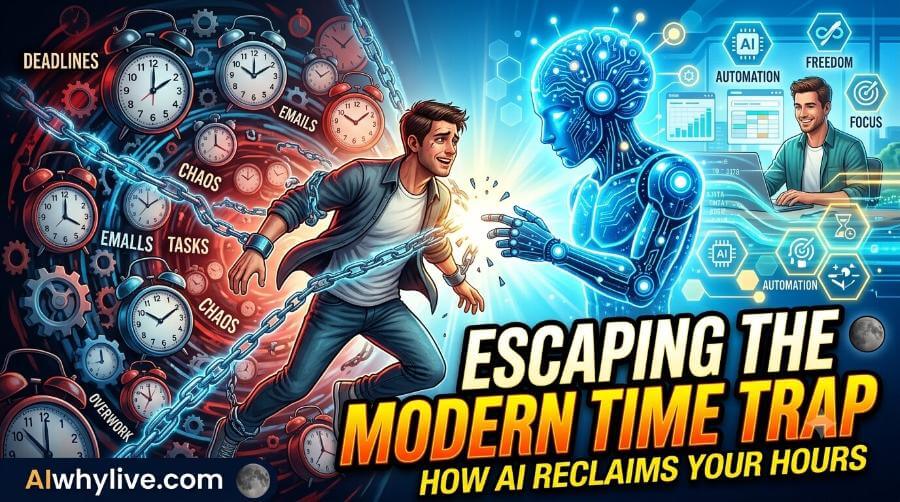
🕰️ The Classic Time Trap Long before smartphones and social feeds, people already struggled with time. The factory clock dictated Read more
The Truth No One’s Telling You 🇵🇭 The Philippine Skills Gap Crisis (By the Numbers) 87% of companies struggle to Read more