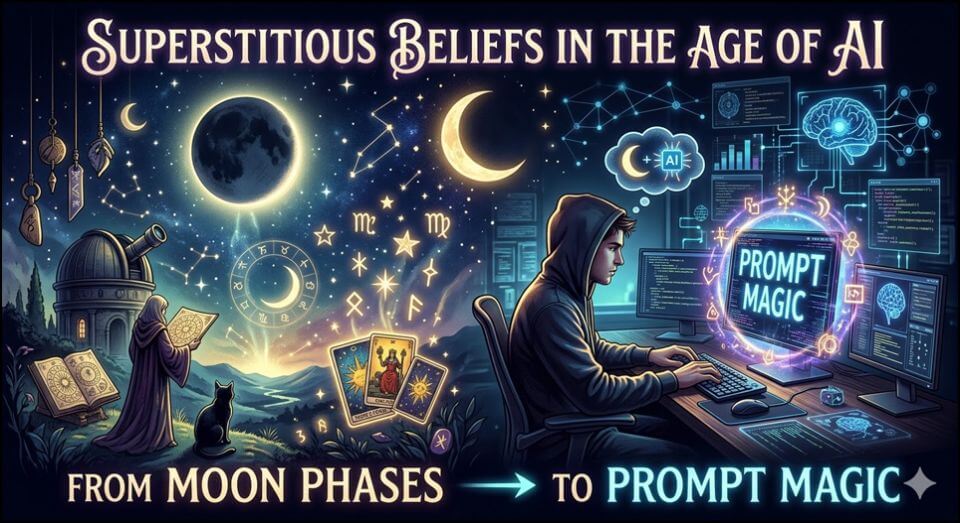
In the Philippines, we are raised in the shadow of the unseen. We avoid the number 13, we knock on wood, and we listen for the lizard’s chirp to tell us if our luck has turned. These rituals were our first attempts at “data analysis”—using patterns to survive the unknown.
But we have entered a new era. We have swapped the moon for the LLM.
The question is: What happens when ancient superstition collides with modern algorithms?
🚨 Reality Check: The Ghost of Friday the 13th
On March 13, 2026, an accident shook the city. Almost immediately, the digital grapevine lit up not with talk of infrastructure, mechanical failure, or human error—but with “Friday the 13th.”
Even in 2026, with world-class AI in our pockets, we still reach for the easiest explanation: The day was cursed. We find comfort in blaming the calendar because it absolves us of the need to analyze the cause.
🎭 Pre-AI: Superstition as Survival
Before the silicon age, superstition filled the gaps where data was absent. It was our primitive “predictive model.”
- Farmers looked at the moon to time the harvest.
- Families avoided certain colors to ward off grief.
- Students carried “lucky pens” to bridge the gap between effort and outcome.
Superstition wasn’t just “belief”—it was a way to feel in control of a world that didn’t provide answers.
⚡ The Age of AI: Superstition Meets the Machine
Today, AI predicts weather, stock markets, and medical outcomes. Yet, the more powerful the AI becomes, the more our “inner villager” emerges. Why?
Because AI feels like magic. And when humans don’t understand the “how,” they default to the “who.” We have begun to treat the Black Box like a Digital Deity.
- “If I prompt at 11:11, will it manifest my vision?”
- “If I type in all caps, will the AI take me more seriously?”
- “Is the AI ‘mad’ at me today because the answers are short?”
We aren’t just using tools; we are performing Digital Rain Dances.
🤫 The Silent Builder’s Perspective
At AIWhyLive.com, we see this clearly: Superstition is noise; AI is leverage.
In the workplace, we see “epal” bosses who cling to outdated hierarchies—the modern version of a tribal curse. They fear what they cannot control. In the same way, using AI without Prompt Literacy is just another form of superstition.
The real power isn’t in “magic words.” It’s in the art of the ask. It’s moving from fluency (just talking) to literacy (understanding the structure).
🧒 ELI12: The Flashlight and the Monster
Imagine you’re scared of the dark because you’re sure a monster lives under your bed. That’s Superstition.
Then, someone hands you a flashlight. You turn it on and realize there’s no monster—only dust bunnies and an old sock. That’s AI.
The flashlight doesn’t “wish” the monster away; it just shows you the truth. The better you know how to aim the light, the less you fear the dark.
📢 The Bold Conclusion
The accident on March 13th reminds us that humans crave meaning. But superstition without clarity is just noise.
The Silent Builder knows: AI is not a ghost in the machine. It is a multiplier of your own intent. Superstition fades the moment you master the art of asking.
🚀 Call to Action
At AIWhyLive.com, we explore the bridge from Superstition to Strategy. We help you move past the “magic” and into the “multiplier”—reclaiming your time, your dignity, and your creativity.
👉 Stop praying to the algorithm. Start architecting it.
Read our latest insights on Prompt Literacy and browse our archive to turn your “rituals” into results.
#AIWhyLive #SilentBuilder #PromptLiteracy #DigitalSuperstition #AIStrategy #FridayThe13th
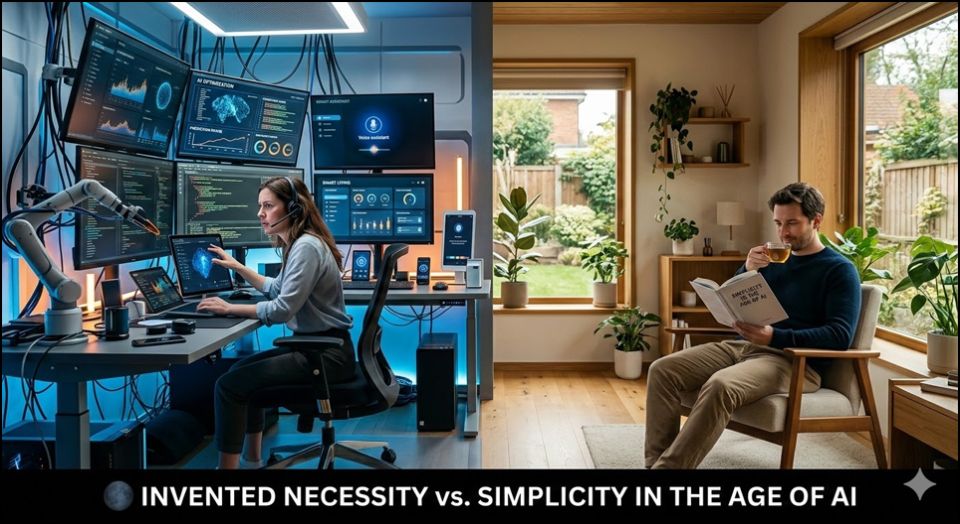
In the Philippines, we have a name for this constant need to be "extra." It’s being "Pa-sosyal" or "Pa-bibo." In Read more
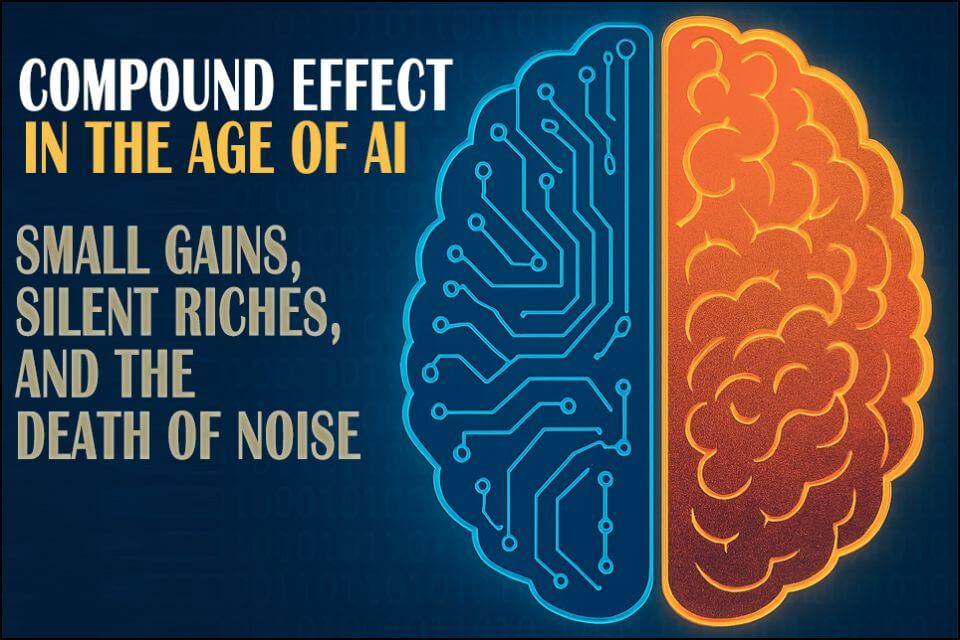
🌑 The Myth of Overnight Success In the Age of AI, everyone is starving for instant virality. We see the Read more
🌑 The Noise of Riches In the Age of AI, wealth is often performed, not lived. We are drowning in Read more