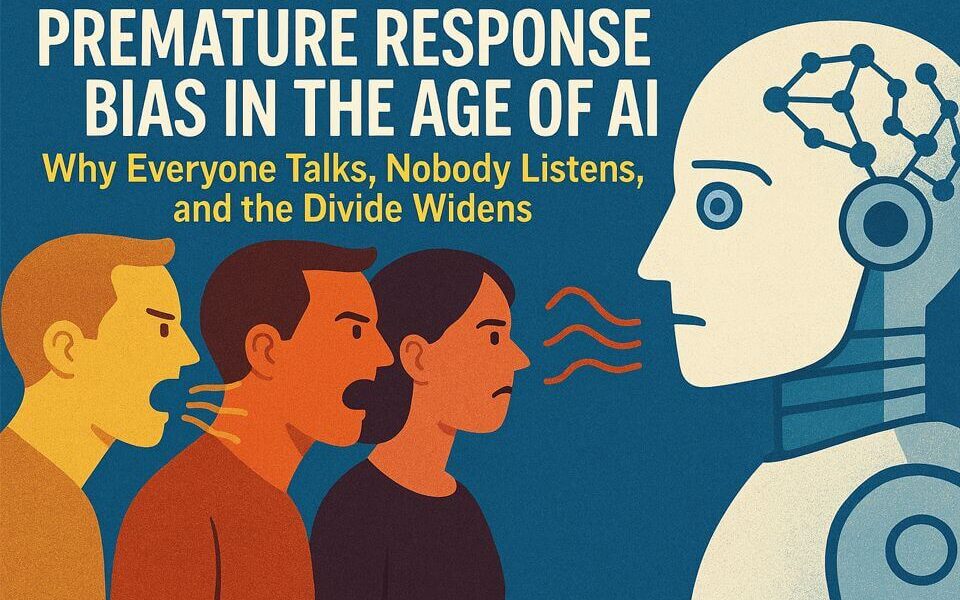
🗣️ Premature Response Bias in the Age of AI: Why Everyone Talks, Nobody Listens, and the Divide Keeps Getting Wider
📖 Abstract: The Noise Economy
In 2026, silence has become an endangered species. The Age of AI has given everyone a megaphone, but it has effectively stripped away the “pause” button. We are witnessing the global spread of Premature Response Bias—the compulsion to react before reflecting, to answer before understanding, and to speak before listening.
The viral question for our generation: If everyone is talking, who is left to hear?
⚡ The Anatomy of Premature Response Bias
Premature response bias isn’t just a glitch in our social etiquette—it’s the new default setting of the human brain, accelerated by silicon.
- AI Acceleration: Instant prompts lead to instant replies, which lead to instant outrage. The time previously spent on “internal processing” has been outsourced to a chatbot. Reflection is replaced by raw reaction.
- Echo Chambers & Speed: Algorithms reward speed and certainty, not nuance. On social feeds, the fastest response wins the engagement war, even if that response is factually hollow or emotionally toxic.
- Cultural Spillover: In our classrooms, boardrooms, and family dinners, this bias manifests as constant interruptions and half-read arguments. We are no longer engaging with people; we are engaging with the first three words they say.
🎭 The Divide Gets Wider
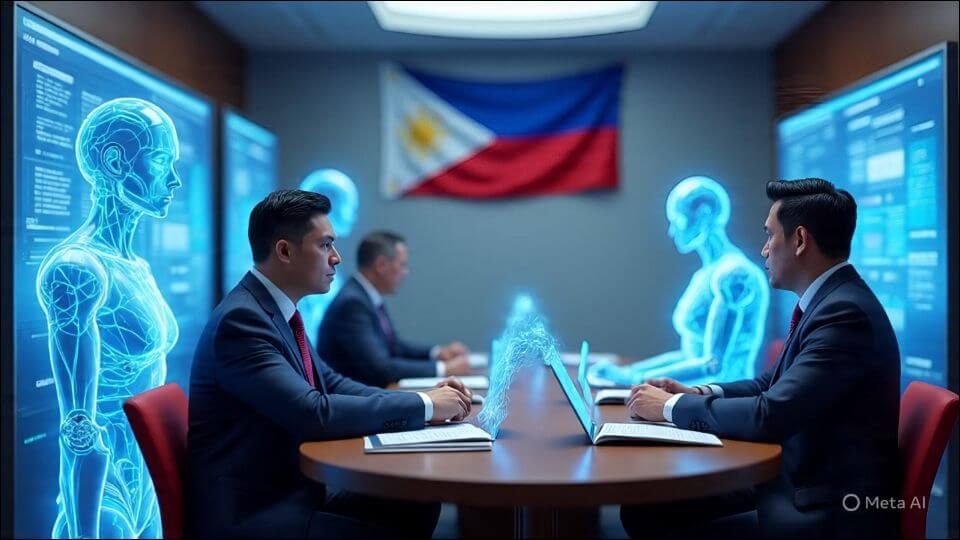
In the Philippines, this divide is no longer just about ideology or which color you wear—it’s about tempo. The digital landscape has fractured into a race of performance. One side races to respond, armed with AI-optimized talking points and pre-packaged rhetoric. The other side doubles down, equally loud and equally fast.
- Listening as Collateral Damage: When speed is the priority, understanding is the first casualty.
- Performance over Persuasion: Politics has shifted from the art of the possible to the theater of the immediate. The “debate” is no longer a search for common ground; it is a race to out-shout the opponent’s algorithm.
In this environment, the “other” is no longer a neighbor with a different perspective; they are simply a signal to be jammed.
🧩 Why AI Makes It Worse (and Better)
AI is a double-edged sword that cuts deepest into our social fabric.
- The Worse: AI tools amplify premature responses. They allow users to churn out instant rebuttals, deep-fry memes, and generate “hot takes” without ever actually reading the source material.
- The Better: Paradoxically, these same tools can be our salvation. AI can be used to summarize opposing views fairly, highlight our own logical contradictions, and force us to confront nuance.
The Paradox: AI can either widen the divide or build the bridge. It depends entirely on whether we use it to listen or just to talk louder.
🧒 Explain Like I’m 12
Imagine a classroom where the teacher asks a question, and every single student starts screaming their answer at the same time. Nobody waits for their turn, and nobody listens to what the person next to them is saying. That’s what Premature Response Bias looks like.
AI is like giving every kid in that room a powerful microphone. It makes the noise much louder—but if we’re smart, we could use those same microphones to pass the “talk power” around so everyone actually gets a chance to be heard.
📢 The Punchline: Viral Truth
Premature response bias is the silent virus of the AI era. It erodes dialogue, turns politics into performance art, and makes our divisions feel permanent.
The real power of AI isn’t in talking faster—it’s in listening better. The most “disruptive” person in a room full of shouting AI-users is the one who chooses to be silent until they truly understand.
Is your AI helping you connect, or is it just helping you ignore? Stop the noise. Start the signal. Join the conversation at AIWhyLive.com.

How Filipinos Can Use Algorithms to Expose Corruption—Before Politicians Weaponize Them 🚨 The Silent Game-Changer in Elections The next political Read more
How AI Helped Me Unpack the Rigged System Filipinos Are Told to Accept 🗳️ “There’s Nothing We Can Do”—Or So Read more
This AIWhyLive.com article tackles AI’s impact on politics, human-first, no “I asked AI…” gimmicks. For those, see “AI Philippine Politics: Read more
AI and Philippine Politics: Part 3 > “Blessed are ye poor: for yours is the kingdom of God.” > — Read more