
Stephen Hawking once said, “The greatest enemy of knowledge is not ignorance; it is the illusion of knowledge.”
In 2026, we are living in the Golden Age of that illusion. When we have the world’s information at our fingertips, we often mistake the speed of the search for the depth of our understanding.
The “Copy-Paste” Consciousness
When you ask an AI a complex question, and it gives you a perfect 5-point summary in three seconds, your brain experiences a “shortcut” to dopamine. You feel like you’ve learned something. But you haven’t. You’ve just witnessed a retrieval.
The Illusion of Knowledge is the gap between what you can access and what you actually possess.
Knowledge Rewired
In 2026, ignorance isn’t the problem.
AI floods us with answers, summaries, and “expert takes.” The danger is believing we know—when all we hold is illusion. The fiesta of chaos begins when we mistake autocomplete for wisdom. To stay sharp, we must look closer at the various illusions currently shaping our digital reality.
⚡ The Framework: Illusions of Knowledge
Illusion 1 – Algorithmic Authority * Trending answers feel true because they’re amplified.
- Noise masquerades as expertise. We often fall for the Illusion of Transparency, thinking we see how the machine works when we only see what it shows us.
Illusion 2 – Prompted Certainty * AI outputs sound confident, even when they are hallucinating.
- Style disguises substance. We have become “Prompt Professors,” masters of the query but apprentices of the actual craft.
Illusion 3 – Cultural Shortcut * Imported frameworks overwrite local realities.
- Filipino nuance disappears under global templates. This mirrors the broader systemic issues found in The Great Philippine Equality Illusion, where the surface level of “digital progress” hides stagnant structural realities.
Illusion 4 – Personal Echo * We seek confirmation, not challenge.
- This creates a false sense of security—the Illusion of Safety—where we believe we are protected by data, while our critical thinking skills are actually being outsourced.
How to Break the Illusion
In the Age of AI, the truly “Ant-like” (relentless and adaptive) must fight for depth:
- The Feynman Test: If you can’t explain the AI’s output to a 10-year-old without looking at your screen, you don’t know it. You only “accessed” it.
- Prompt for Process, Not Result: Stop asking AI for the answer. Ask it for the methodology. Use it as a tutor, not a ghostwriter.
- Value the Struggle: If a concept is easy to understand, you’re probably just skimming the surface. Seek the friction.
The Bottom Line
The machine is not a brain; it is a bicycle for the mind. If you never get off the bike and walk, your muscles will atrophy.
Don’t let the convenience of the answer blind you to the value of the question.
Stop collecting answers. Start building understanding.
Intro & Source Inspired by Sam Altman's reflections on modern delusions of security—from wealth and health to knowledge—and how AI Read more

When “Open Data” Becomes a Closed Lie 📖 Abstract: The Glass Wall We Can’t See Through AI promises transparency—dashboards, audits, Read more
Can Money Buy Happiness, or Just More Loneliness in the Age of AI? 📖 Abstract: The Currency of Illusion For Read more
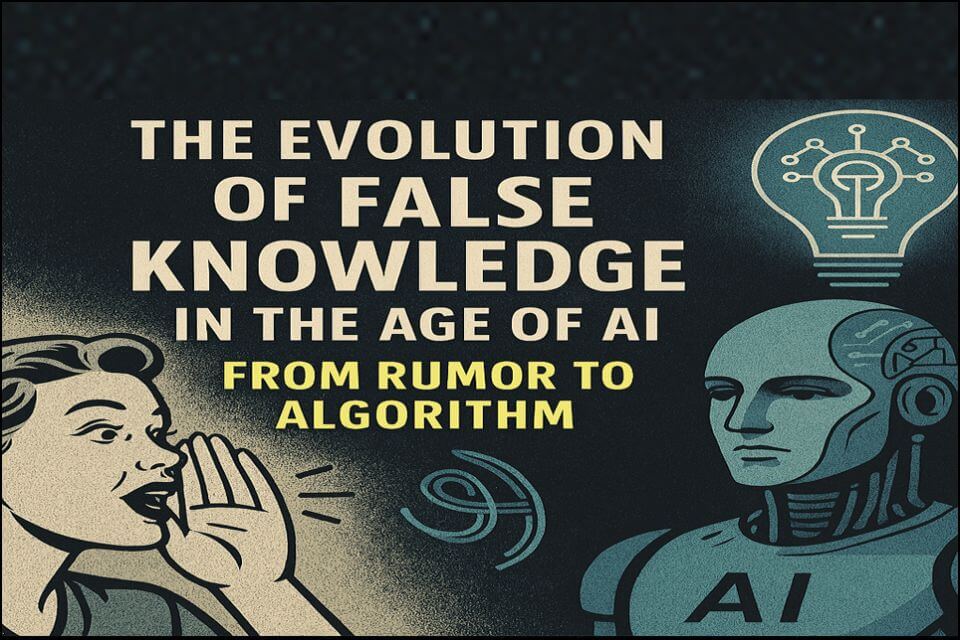
🧠 Abstract: False Knowledge Reborn False knowledge is not new. From gossip in the plaza to myths in textbooks, Filipinos Read more