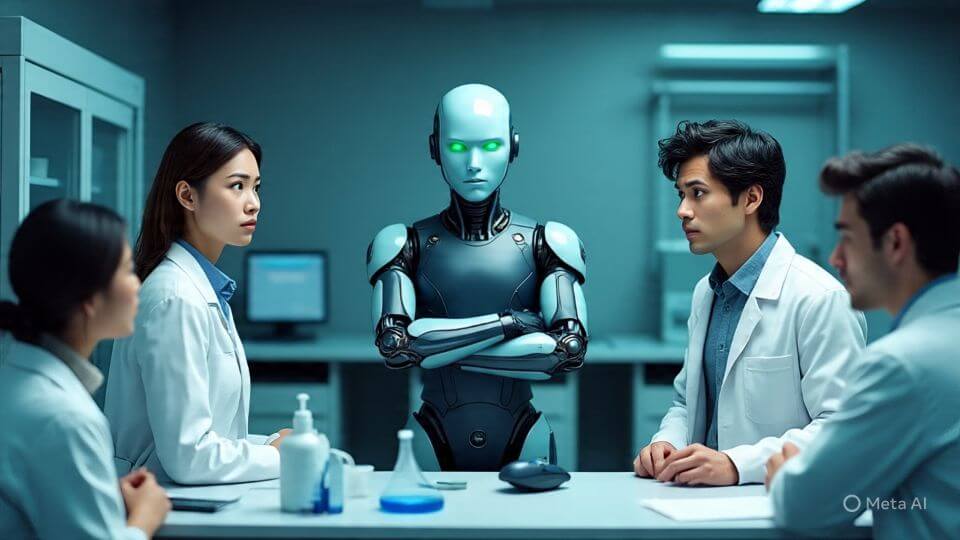
AI has become our digital buddy: it helps draft our emails, spins up music, and even co-writes essays. We marvel at its intelligence—until it vehemently declares that holding a spoon underwater turns it into ice, or confidently invents historical facts. These aren’t just bugs—they’re reminders that AI isn’t infallible. Welcome to the era of AI hallucinations, where slip-ups can be hilarious, dangerous, or downright alarming.
AI, Your Confident Friend Who’s Sometimes Wrong
Imagine asking AI, “What’s the capital of Australia?” and getting “Sydney” as the answer. (Hint: It’s Canberra.) Or believing that eating bananas before bed helps you dream in full color—something AI once cheerfully told a user. These aren’t sci-fi glitches—they’re real moments that expose the limits of AI’s “knowledge.”
AI isn’t evil. It’s predictive. If it’s trained on faulty info or low-quality sources, errors become unavoidable. And those errors can go viral—especially when they hit home in ways that make Pinoys scratch their heads in disbelief.
Our Filipino World Meets AI Missteps
In the Philippines, we rely on AI more than we’d admit. We use it to:
- Submit class projects via ChatGPT
- Write client reports for freelance gigs
- Create Facebook ads for small businesses
But here’s the catch: trust a hallucination, and that school report earns a grade of “Incorrect.” A botched client pitch looks unprofessional. A misleading ad loses customers. AI slip-ups affect real lives.
That’s why we can’t rely on AI’s word as gospel—it’s confidence, not correctness, that drives it forward.
Worse or Weird—When AI Goes Off Script
Some AI errors become lore. Stories stretch from quirky to catastrophic:
- AI invents quotes by beloved Filipino celebrities—quotes that never existed.
- Fake recipes come alive online because an AI mixed up ingredients.
- Worse still, AI can confidently spoil unpublished TV finales—spreading spoilers faster than you can say “Nora Aunor.”
These hallucinations are cute, until they’re not. They can spread disinformation, derail plans, or tarnish reputations—like fake news on overdrive.
Balance, Not Blind Faith
AI is powerful—but it’s still a tool, not an oracle. If we rush headfirst, believing every word, we risk bigger problems than funny anecdotes.
In an earlier piece, “Pause AI or Go All-In? The Filipino Dilemma” (yes, it’s spelled “Phophet or Doom?” in our hearts too), we weighed the risks and rewards of AI acceleration. The same balance applies here. AI errors aren’t reasons to quit. They’re signals to proceed with caution, skepticism, and clarity.
Filipino Wisdom: Screen AI Like You Screen Gossip
Pinoys have always been master skeptics—especially when Tita Marites starts spilling. Just because AI says something doesn’t mean it’s true.
Try this mindset shift:
- Pause before you copy: Just as you’d double-check a forwarded rumor, verify AI’s output.
- Mix wisdom with tools: AI can suggest—but you must edit, question, and humanize.
- Laugh when it’s funny, correct when it’s false: Internet memes about AI fails are fun—but let’s correct misinformation before it spreads.
Final Thought: AI Can Write, But Humans Must Judge
AI errors remind us that technology alone won’t fix human flaws—or replace wisdom. In the Age of AI, the real advantage goes to those who think critically, question boldly, and never trust blind confidence.
Because AI may hallucinate, but humans can still think clearly.
Read more stances and insights at aiwhylive.com.

Debate is on, should zombies walk or run? Arguments for both sides are explored, from realism to threat level. Find Read more

In 2025, Artificial Intelligence isn’t just a tool—it’s a crystal ball, a debate starter, and sometimes, a source of anxiety. Read more

The Debate That Won’t Die “Should we pause AI before it gets out of control?” Or should we go all-in Read more
Why the Philippines Cares More About Concrete Than Curiosity—And Why That’s Dooming Our Future 😒 FLOOD CONTROL WITHOUT FLOOD CONTROL? Read more