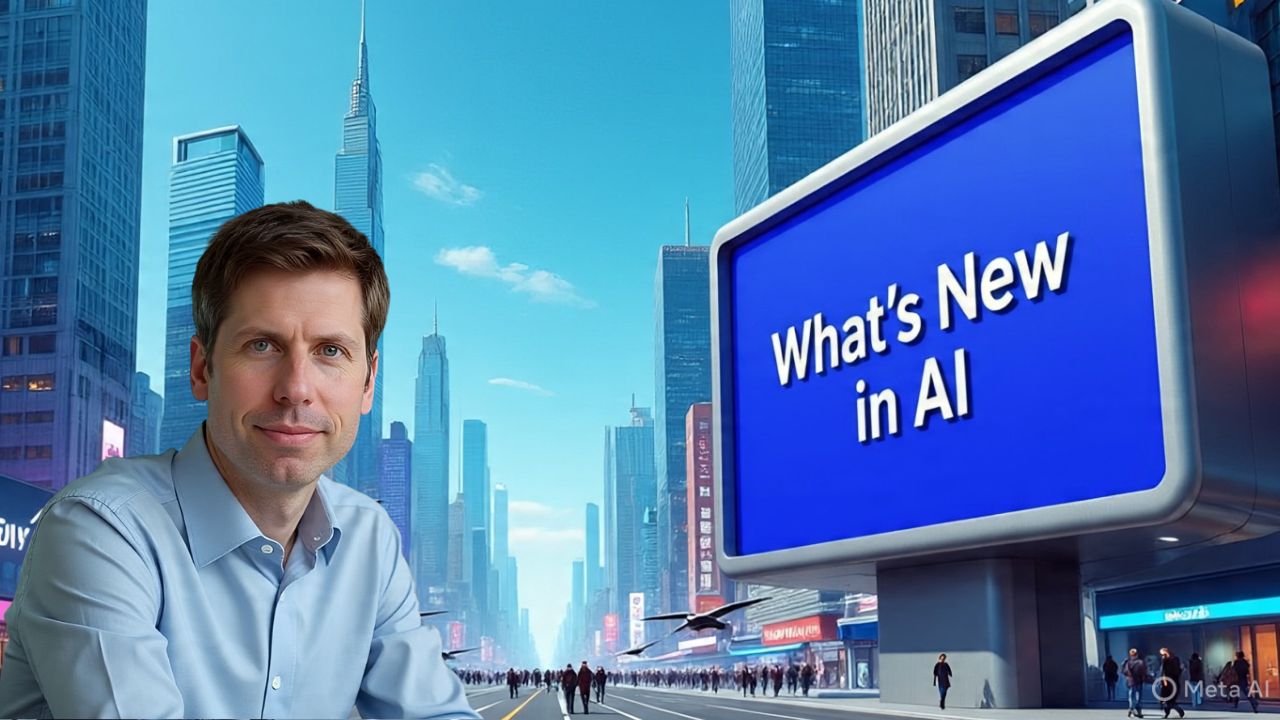
In a rare podcast moment, OpenAI CEO Sam Altman leaned into vulnerability, saying out loud what many in tech won’t: “No one knows what happens next.” He called AI a “weird emergent thing,” a force evolving faster than anyone can grasp, reshaping industries, values, and even human purpose.
And that ripple? It’s already hitting the Philippines. Whether you’re answering calls in Cebu, vending taho in Manila, designing costumes in Bacolod, or teaching Gen Z kids in Leyte—AI is shifting the ground beneath your feet.
🧠 The Global Signal: Altman’s Growing Alarm
In his podcast with Theo Von, Altman raised flags:
- AI could outperform humans across jobs, leaving millions disoriented.
- It might erode human “main character” energy, making people feel unnecessary.
- Without ethical alignment, AI could amplify bias, misinformation, or exploitation, especially in countries without strong safeguards.
- The best-case path? A “slow, continuous takeoff”, so society has time to adapt.
But it’s not just about feelings anymore. Altman doubled down in AIWhyLive’s featured article, predicting AI agents will:
- Work independently
- Outperform junior staff
- Rival seasoned engineers
- And not just follow instructions—they’ll solve problems, generate knowledge, and reshape industries.
This isn’t sci-fi. It’s real. And it’s coming fast.
🇵🇭 For Filipinos, This Isn’t Just Tech News. It’s a Survival Question.
Here’s why Altman’s forecast hits differently in the Philippines:
📉 1. Call Center Workers? First in Line.
AI is already handling customer support and logistics. As global firms cut costs, millions of BPO jobs are on the chopping block. The pivot isn’t optional—it’s urgent. We need AI-savvy creators, builders, and quiet entrepreneurs, not just callers.
🧠 2. Identity Crisis Incoming
Filipino culture ties dignity to labor. But if AI does everything better, what’s left for us? The answer isn’t to fight AI—it’s to evolve our sense of worth beyond productivity. Think creativity, care, comedy, and community. These are strengths AI can’t fake.
🏭 3. Land Grabs, Cloud Battles
AI needs mega data centers. The Philippines, especially Visayas and Mindanao, is in the crosshairs. If locals don’t get a seat at the table, foreign firms could exploit land, energy, and sovereignty, leaving crumbs behind.
🧒 4. Gen Z Must Become AI-Native
Altman advocates for digital well-being—but Filipino schools still teach tech like it’s 2003. We need AI literacy now: not just tools, but ethics, logic, and curiosity. Let kids ask: Whose tech is this? Who benefits? Who gets erased?
🛡️ 5. Stop Importing Morals
Global models often misunderstand Filipino culture. That leads to bias, exclusion, and broken systems in healthcare, education, and governance. We must define our own AI ethics—based on Filipino realities, not imported playbooks.
🧬 What Should Filipinos Do Now?
Forget the hype. Survival means strategy. Here’s the start of a quiet counter-play:
- Upskill with intention. Learn AI tools, but don’t flaunt them. Build quietly.
- Document and archive. Let every local act—from cosplay to farming—be digital proof of genius.
- Rethink the narrative. Don’t copy Silicon Valley. Craft a vision rooted in Filipino agency.
- Shape the moral compass. If we don’t define AI’s ethical boundaries, someone else will—and they may not speak Bisaya.
🌀 Final Twist: Filipinos Still Matter
If Altman’s predictions are right, the world is about to be reshaped by agents, algorithms, and autonomous systems.
But here’s the truth: agency doesn’t die. It mutates. It gets quieter. More strategic. More Filipino.
We’ve built empires before—with scrap, silence, and soul. It’s time to do it again.
Ready to build your AI toolkit for dignity, leverage, and low-key domination? Say the word. I’m here.
When the Boss Becomes a Bot—and You Still Matter
📆 AIWhyLive Editorial Summary
The fourth wave of Sam Altman’s AI forecast has landed—and it’s not just a tech update, it’s a shift in human narrative.
“AI agents won’t just follow instructions. They’ll generate new knowledge and rival seasoned engineers.” — Sam Altman,AIWhyLive Forecast 2025
That changes everything. Not just hiring, but hierarchy. Not just speed, but sovereignty.
And yet, the Filipino response doesn’t have to be panic. It can be quite resistant.
This week, we ask: What happens when the boss becomes a bot? And what kind of Filipino ingenuity refuses to disappear?
🚨 What’s New in AI (and Why Pinoys Should Care)
- AI agents are no longer passive. They’re autonomous. They solve business problems, outperform juniors, and challenge traditional roles.
- Altman admits even OpenAI doesn’t fully grasp the outcomes. He calls it a “weird emergent thing.”
- The Philippines is caught between global acceleration and local stagnation—where Excel still dominates schools and cosplay culture quietly outpaces formal AI policy.
🔥 Editorial Punchlines
- Job roles aren’t just at risk—they’re dissolving. From call centers to classrooms, AI is mutating expectations.
- Filipino identity must outpace automation. We can’t just teach tools; we must teach worth.
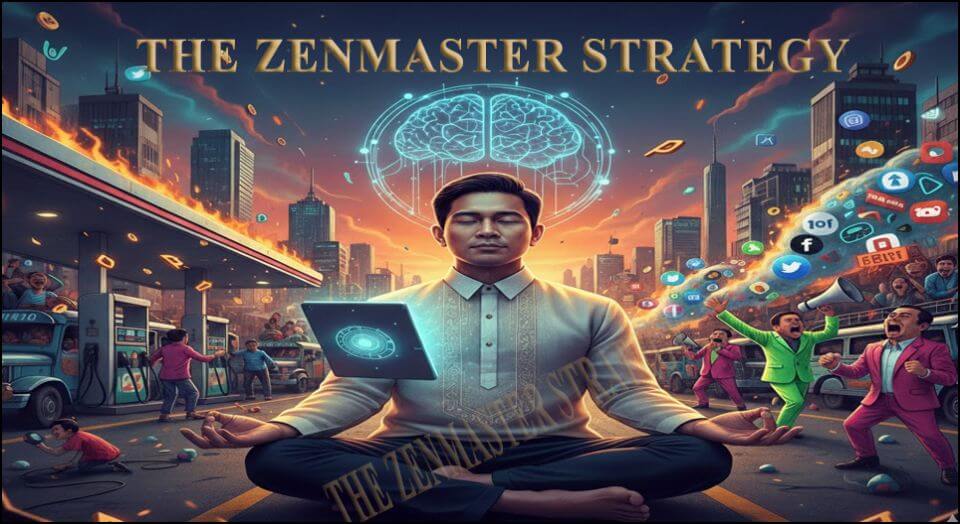
- The “quiet but filthy” mindset becomes a survival strategy. Loud tech isn’t our future—strategic, low-key leverage is.
🎯 Featured Frame: “AI Is Coming for Your Job—and Your Identity. What Now, Pilipinas?”
This week’s flagship article dives deep into Altman’s dual forecast—AI’s rise and human purpose collapse. But it flips the panic into power:
“Agency doesn’t die. It mutates. It hides in small acts, back-alley creativity, home-based empires.”
It’s not just a read. It’s a rallying cry for:
- BPO agents mapping new skill paths
- Cosplayers are achieving digital rebellion
- Youth building quiet empires on mobile phones
- Educators decoding AI with parables and street wisdom
📚 Sources Used
Here’s every source that shaped this week’s narrative:
| Source Title | Link | Type |
|---|---|---|
| Sam Altman Reveals His Fears for Humanity as AI Evolves | MSN News | Podcast summary |
| Sam Altman’s AI Forecast: Job Loss, Innovation, and the Rise of Autonomous Agents | AIWhyLive | Feature article |
| AI in the Classroom (Philippines Focus) | AIWhyLive | Contextual analysis |
🔍 Introduction: 4Ps, 5Ps, xPs—Futile Band-Aids or Foundations for Action? Sam Altman, CEO of OpenAI, predicts that AI agents will Read more

🔍 Introduction: The Gold Rush That Feels Like Fool’s Gold AI is everywhere—on billboards, in boardrooms, and inside your browser. Read more

In 2025, artificial intelligence has become a content factory. Every scroll, search, and swipe delivers AI-generated text, images, and opinions—some Read more

AI tools are rapidly reshaping how we create, communicate, and build. From pitch decks made in seconds to logos generated Read more