🌅 The Morning Transition No One Prepares You For
I shut down my IDE. I close my browser tabs after a 16-hour sprint. The whole day, I’ve been bouncing logic between OpenAI, Claude, Copilot, Blackbox, and Gemini. My code runs perfectly, my schemas are clean, my systems hum like a flawless machine.
Then I step outside. A meeting. A message. A client. Within minutes, frustration creeps in.
I love meeting humans—don’t get me wrong. Minus the toxins and ego, if you know what I mean, human connection is still irreplaceable. But here’s the paradox: working with egoless, super-intelligent machines defines the day-and-night difference. They never argue, never posture, never delay. They even apologize for my mistakes. The ones without a heart often show a bigger kind of humility compared to humans. And sometimes, that opposite is what I can no longer tolerate.
It’s not that I dislike people. It’s that after living in a world of instant, logical compliance, human collaboration suddenly feels… broken.
⚖️ My Upgraded Life: More AI, Less Me
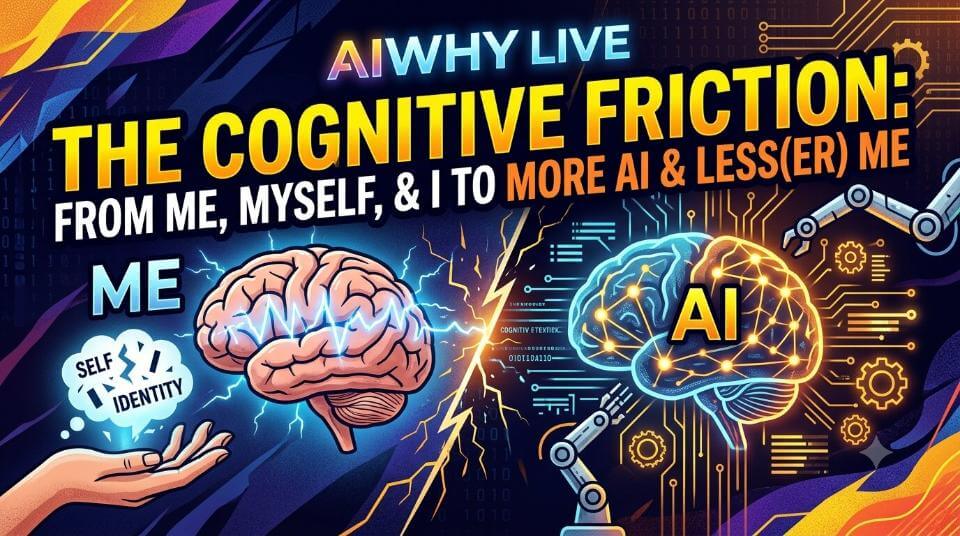
I used to live by “me, myself, and I.” Now it’s “AI, AI, and a little me.”
- Finding clients = AI
- Making proposals = AI
- Conceptualization & development = AI
- Billing = AI
It’s just AI and a little of me. And the outcome? All good—if not the best.
This is the upgrade: I’ve outsourced the friction, the delays, the inefficiencies. My life runs smoother, faster, cleaner. But there’s a catch.
🧩 Why Human Collaboration Feels Broken
Suddenly, the slipstream turns into wet cement. I spend hours explaining concepts that an LLM would grasp in one prompt. I hit defensive walls, emotional buffers, scheduling delays.
Traditional Collaboration Loop: Human Idea → Emotional Buffer → Miscommunication → Meeting → Delay → Revision
AI Slipstream: Human Intent → Prompt → Instant Execution → Iteration (Seconds)
Humans need context, validation, and time. In the zone of pure AI execution, those traits start to feel like bugs instead of features.
🧒 ELI12: The Spaceship and the Bicycle
Imagine you spend 16 hours piloting a supersonic jet. Push a button, cross oceans in hours. Perfect responsiveness.
Then you climb out, and someone hands you a rusty bicycle. Ride it across the country—with a group that keeps stopping to argue about which way is north.
The bicycle isn’t evil. The people aren’t bad. But after flying at machine speed, pedaling through mud feels unbearable. That’s the shift from AI speed to human speed.
🗓️ Meetings vs Machines
When I sit down with humans, I value the connection. But often it comes with toxins and ego—the invisible baggage that slows everything down. Conversations get tangled in emotions, defensiveness, and delays. A simple idea can take hours to process, and sometimes the energy feels heavier than the work itself.
When I sit down with AI, it’s the opposite. Egoless, super‑intelligent machines never argue, never posture, never delay. They even apologize for my mistakes. The ones without a heart often show more humility than humans with one. With AI, every interaction is clean, fast, and focused. It’s execution at the speed of thought.
That contrast defines the day‑and‑night difference. And sometimes, it’s the opposite I can no longer tolerate—the messy inefficiency of human collaboration after living in the slipstream of flawless AI logic.
⚠️ The Good News or the Curse
Here’s the paradox: AI makes everything smoother. The outcomes are excellent. The productivity is unmatched. The leverage is real.
But the curse? Human interaction feels broken. I love working with AI more than with humans. The machine doesn’t argue, doesn’t delay, doesn’t posture. It just executes.
And that’s the danger: the more I rely on AI, the less tolerance I have for human messiness.
🏁 My Human Conclusion
AI is my leverage. I admit—it’s addictive, like a drug for my impatient mind. I spend 16 hours a day with algorithmic co‑pilots, and the risk is real: I start treating humans like broken code.
Being a proud nursing dropout, I sometimes wonder why I can connect so easily with doctors when I don’t even bother asking AI about it. Maybe it’s not about professions, IQs, or titles—it’s about compassion, about knowing how to compartmentalize the good and the bad so you don’t emit toxins. Because let’s be honest: some people are simply toxic, hoping the world will smile and understand them.
With AI as my go‑to tool, those toxins become irrelevant and immaterial to my success or failure. Machines without a heart often show more humility than humans with one—they never argue, never posture, never delay, and even apologize for my mistakes. That contrast is striking, and sometimes, it’s what I can no longer tolerate.
The goal of the AI revolution isn’t to erase human friction. It’s to let machines handle speed so we can maintain the discipline to be human when the laptop closes.
And here’s my truth as a Filipino builder: I have lived my life as a human, and I will die like one. Finding AI along the way was my life‑changing Eureka moment—but it doesn’t replace bayanihan, patience, and messy collaboration. It only reminds me that speed is the machine’s gift, but humanity is still mine.
📢 Viral Hook
🔥 From “me, myself, and I” to “AI, AI, and a little me.” Clients, proposals, development, billing—all handled by AI. The outcome? All good, if not the best. The curse? Human interaction feels broken. Read the full breakdown of Cognitive Friction at AIWhyLive.com.
The Infinite Scroll Disease In 2026, AI doesn’t just generate content—it generates Brain Rot. Before the AI revolution, Brain Rot Read more

How a small, stubborn Filipino developer, a Chinese AI powerhouse, and a whole lot of curiosity built a tool that Read more
🌑 The Old Gatekeepers Are Nervous There was a time when certain skills lived behind locked doors. Coding belonged to Read more
🧠 A Strange Time to Be Alive We are living in a time where: Stupidity can be monetized Noise can Read more