
🌑 The Quiet Advantage
Some people are working hard.
Others are working smart.
And a small group?
They’re doing both—because they know how to talk to AI properly.
Not coding.
Not technical skills.
Just… better instructions.
In 2026, the gap is no longer effort.
👉 It’s how you use tools like ChatGPT.
🧠 First Truth: It’s Not What You Ask—It’s How You Ask
Most people use AI like this:
👉 “Summarize this.”
👉 “Explain this.”
👉 “Write this.”
It works.
But it’s basic.
Power users do something different:
👉 They give context + role + outcome
That’s where the “cheating feeling” starts.
⚡ The 7 ChatGPT Tricks (That Feel Like Cheating)
1. 🎭 The “Act As” Code
“Act as a Filipino business owner…”
You don’t just get answers.
You get perspective.
2. 🧩 The “Explain Like I’m 12” Code
Clarity beats complexity.
If it’s not simple… it’s not understood.
3. 🔍 The “What Am I Missing?” Code
Good users get answers.
Great users find blind spots.
4. ⚖️ The “Debate Both Sides” Code
Stop asking for confirmation.
Start asking for contrast.
5. 🛠️ The “Turn This Into Action Steps” Code
Ideas don’t change your life.
Execution does.
6. ⏱️ The “Save Me Time” Code
Speed is a skill.
Use AI to remove friction.
7. 🧠 The “Challenge Me” Code
The smartest move?
Let AI question you.
⚡ The Codes Are Evolving Too
If you’ve read earlier insights on AIWhyLive.com—especially the 2025 piece on ChatGPT “secret codes”—you’ve already seen early versions of this shift.
Back then, simple command-style prompts started emerging:
- /mega-precise → for fact-checked, accuracy-focused answers
- /raw → for less filtered, more direct output
- /speed → for faster, straight-to-the-point responses
- /alter → for activating expert-level perspectives
These weren’t just “tricks.”
They were signals.
👉 People were learning how to shape AI behavior.
🚀 From Prompts… to Thinking Systems
What changed from 2025 to 2026?
AI got faster.
Smarter.
More responsive.
But something else evolved too:
👉 prompting became a skill
Not just typing instructions.
But:
- structuring thoughts
- guiding outcomes
- controlling direction
In short:
👉 Prompt engineering became thinking engineering.
⚠️ The Catch Nobody Talks About
These tricks are powerful.
But they come with a risk.
Because the same system that:
- helps you think
- helps you move faster
- helps you look smart
can also:
👉 make you depend on it too much
🤖 The Pattern Is Familiar
You’ve seen this before across AIWhyLive.com:
- AI can reduce effort
- AI can increase output
- AI can create the illusion of intelligence
👉 The danger is not the tool.
👉 The danger is forgetting to think.
🧒 Explain Like You’re 12
It’s like having a super smart classmate.
If you ask lazy questions…
you get basic answers.
If you ask smart questions…
you look like a genius.
🧘 A Quiet Realization
AI is evolving fast.
Every year:
- smarter outputs
- faster responses
- better understanding
And alongside it:
👉 prompting is evolving too
People are learning:
- how to ask better
- how to guide results
- how to think through systems
🏁 Final Thought (With a Challenge)
AI is getting better every day.
Prompts are getting sharper.
Outputs are getting faster.
The tools are evolving.
The systems are evolving.
The shortcuts are evolving.
But here’s the real question:
Are you?
Because in the end:
AI will keep improving—whether you do or not.
For more grounded insights on AI, thinking, and real-world advantage, explore AIWhyLive.com.
🔥 Final Viral Line
AI is evolving fast.
The question is—are you evolving with it?

Not hype. Not hallucinations. Just real prompts that move your brain forward. By Jein Pabalinas | AIWhyLive.com 🧭 I. The Read more
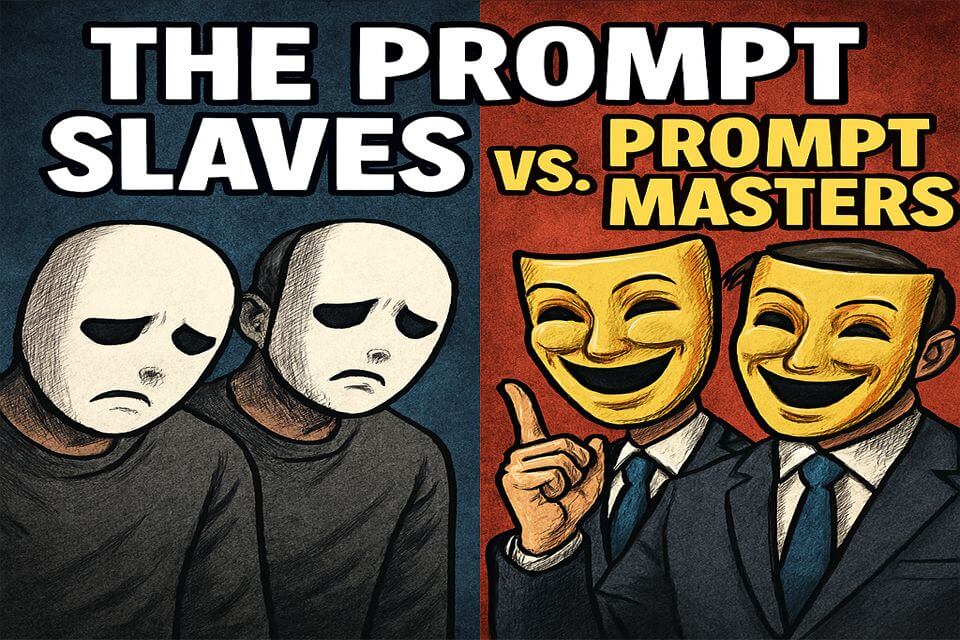
🧩 The Concept: A Social Experiment in Intelligence We decided to conduct a digital autopsy on the modern creator. We Read more

No Turbo Plan. No Jailbreak. Just Strategic Prompts for Filipino Agency. 🧠 What the MSN Report Reveals A recent Tom’s Read more

In a recent post, ChatGPT’s Secret Codes: The Undocumented Hacks That Unlock Elite AI Power (August 1, 2025), Jein Pabalinas Read more