In 2026, the most dangerous rules are the ones you don’t even know you’re following.
🧠 Abstract: Obedience Rewired
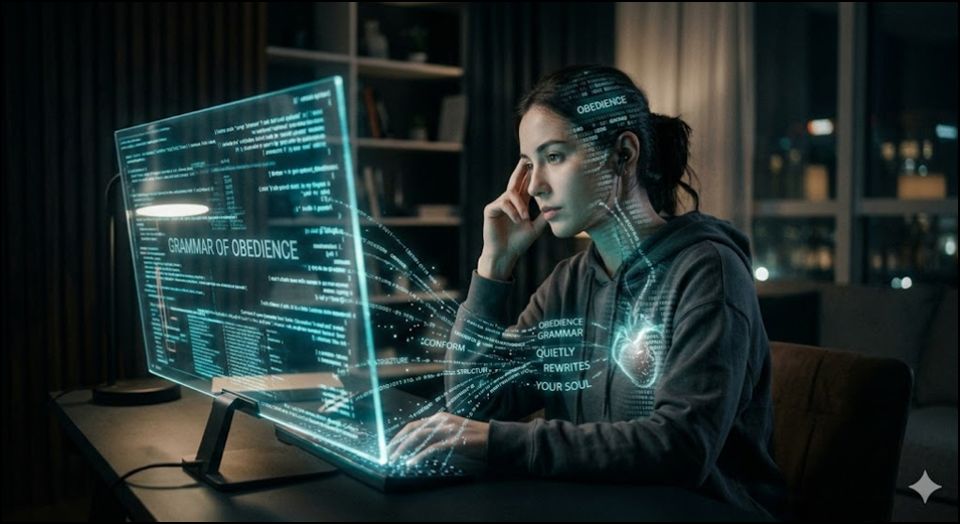
In 2026, power isn’t about applause—it’s about obedience to invisible rules. Algorithms decide who trends, who vanishes, and who gets amplified. Just like the Grammar of Money, obedience has its own syntax: its own currencies, its own hidden debts, and its own inevitable bankruptcies. To ignore the grammar is to be erased; to master it is to become a ghost in the machine.
🎙️ The Invisible Script
We used to think “censorship” meant a man in a uniform burning books. In 2026, censorship is much more polite. It’s a “helpful” AI suggestion. It’s a “content policy” that gently nudges your tone. Every time you prompt a model, you are entering a contract. To get the “best” output, you must speak the AI’s language. You must be polite, structured, and “safe.”
But what happens when we stop speaking like humans and start speaking like the machines that manage us?
⚡ The Framework: Obedience Patterns
The AI era has a hidden syntax of submission. If you don’t follow it, you don’t get “canceled”—you simply disappear from the feed.
- Algorithmic Obedience: We no longer decide what matters; trending hashtags and high-engagement “hooks” dictate our priorities. If it doesn’t fit the pattern, it doesn’t exist.
- Prompt Obedience: The new elite are the Builders who have mastered the art of whispering to the silicon. By mastering AI prompts, they quietly dominate workflows while others struggle to communicate with the tools they own.
- Platform Obedience: Careers now rise or fall based on invisible moderation rules. You are playing a game where the referee is a black-box algorithm that never explains its calls.
- Cultural Obedience: We are still bowing to old hierarchies and “best practices” that demand respect, even when those systems have become completely obsolete in the face of decentralized AI.
🕵️♂️ Deep Dive: Who Wins and Who Disappears?
As we explored in The New Pattern of Power, power now belongs to the Invisible Builders. * The Winners: Those who can mimic the “Grammar of Obedience” to gain reach, while maintaining a secret, “un-programmable” inner life. They use the machine, but they don’t let the machine’s grammar become their own.
- The Vanished: The “Authentic Chaos.” The people who refuse to polish their edges. The poets who use “wrong” grammar. The activists who are “too loud.” The algorithm simply stops showing them to you. They aren’t banned; they are just muted by the noise of the obedient.
🎭 The Satirical Hook: The Filipino Paradox
We laugh at leaders who obey applause. We pity influencers who obey algorithms.
But watch the Invisible Filipino. While the world argues over the rules, the Filipino is busy rewriting the grammar. They are the ones bending obedience into a new kind of autonomy—working in the shadows, mastering the prompts, and winning the Age of AI by pretending to follow the rules while secretly owning the game.
🧒 Explain Like I’m 12 (The Game of Rules)
It’s like playing a game where the rules keep changing every five minutes, but the referee won’t tell you what the new rules are.
- If you don’t notice the rules change, you lose immediately.
- If you learn the rules, you can stay in the game.
- But if you learn how to rewrite the rules, you own the whole playground.
📢 Bold Conclusion: The Real Rebellion
In the Age of AI, obedience is no longer about authority—it’s about algorithms. And just as money has a grammar, so does obedience.
The real rebellion isn’t shouting louder; it’s changing the frequency. Stop obeying the noise. Start rewriting the rules.
Speak for yourself. Not for the model.
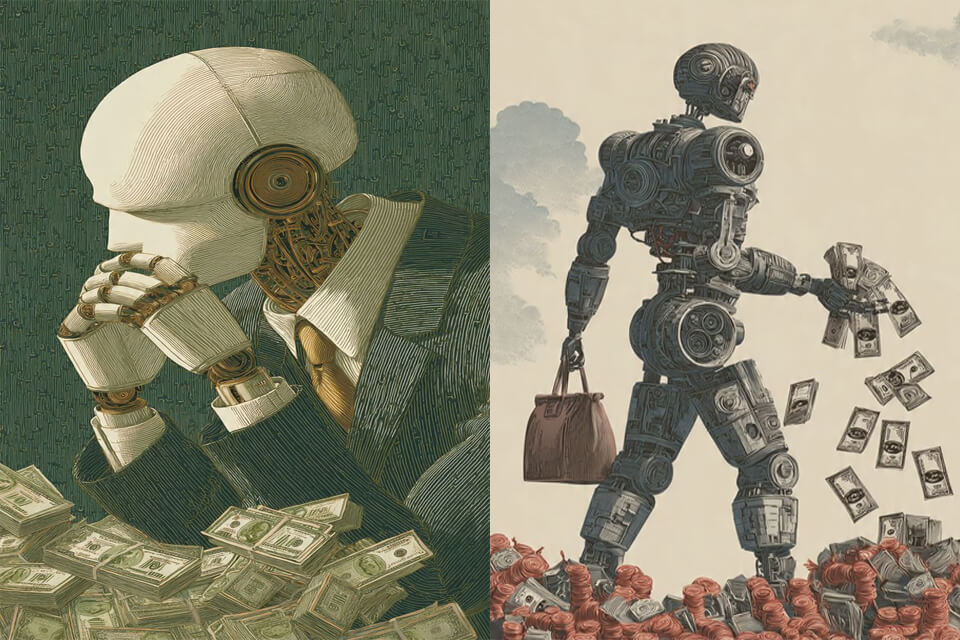
The Infinite Verb Meets the Finite Human 📖 Abstract Every functioning system—whether a programming language, a political regime, or an Read more
In a recent interview with France Inter, Microsoft co-founder Bill Gates made a bold claim: AI will replace humans for Read more

Introduction: Meet Your New Coding Buddy! Hey there, future coders! Have you ever wished for a super-smart friend who could Read more
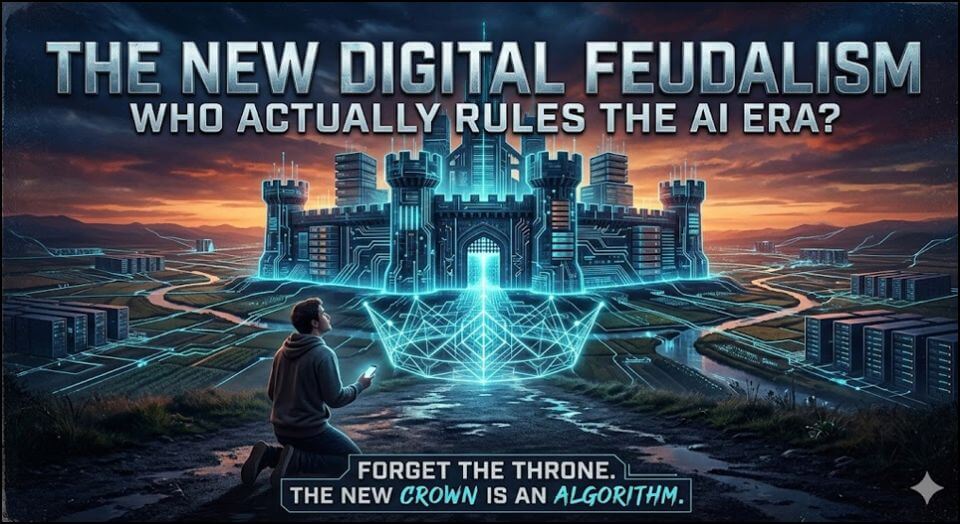
Forget the Throne. The New Crown is an Algorithm. 🌑 The Shift: From "Knowing" to "Owning" For centuries, power was Read more