When Knowledge Expands but Wisdom Shrinks
📖 Abstract: The Mirage of Instant Expertise
We live in the Age of AI, where information is infinite, searchable, and available at the speed of a swipe. Yet paradoxically, the Gap of Ignorance is widening. Filipinos are drowning in data but starving for discernment.
This gap is not about access—it is about accountability. Ignorance today is not about not knowing—it’s about choosing not to know. AI provides us with the Human Mask of perfect prose, flawless code, and data-driven strategy. We mistake the machine’s speed for our own competence. The result is a dangerous Confidence Bubble: we look smart, but we are confidently wrong.
⚡ 1. The Architecture of the Gap
Ignorance in the Age of AI is not passive—it is organized, curated, and rewarded.
- A. The Bypass of Process: Traditionally, knowledge was earned through struggle—research, failed drafts, synthesis. AI bypasses this process. You get the destination without the journey. You have the answer, but not the logic that makes it true.
- B. Authority Bias: AI delivers responses in confident, professional tones. Our brains accept them as truth. Perfect grammar becomes a proxy for accuracy. We stop questioning because the presentation is persuasive.
- C. The Illusion of Control: Because we “prompt” the machine, we feel agency. In reality, we are choosing between three versions of a pre-calculated average. The machine leads; the human follows.
The Gap of Ignorance is built on convenience, but convenience erodes comprehension.
🧩 2. Filipino Realities: Ignorance as Ritual and Alibi
The Gap of Ignorance is visible in everyday Filipino life:
- Vote Buying: We know it’s wrong, but rationalize it as “help.”
- Ningas-Kugon Reform: We start strong, burn out fast, and reset the cycle.
- Digital Echo Chambers: Each citizen lives in a curated hallucination, eroding shared reality.
- Semantic Sanitization: Failures are renamed—corruption becomes “administrative overhead,” outages become “atmospheric challenges.”
In professional and political spheres, the gap becomes an alibi:
- The Consultant’s Mask: “Strategic Plans” and “Feasibility Studies” generated by AI look world-class but fail to account for messy local realities. They become perfect excuses for incompetence.
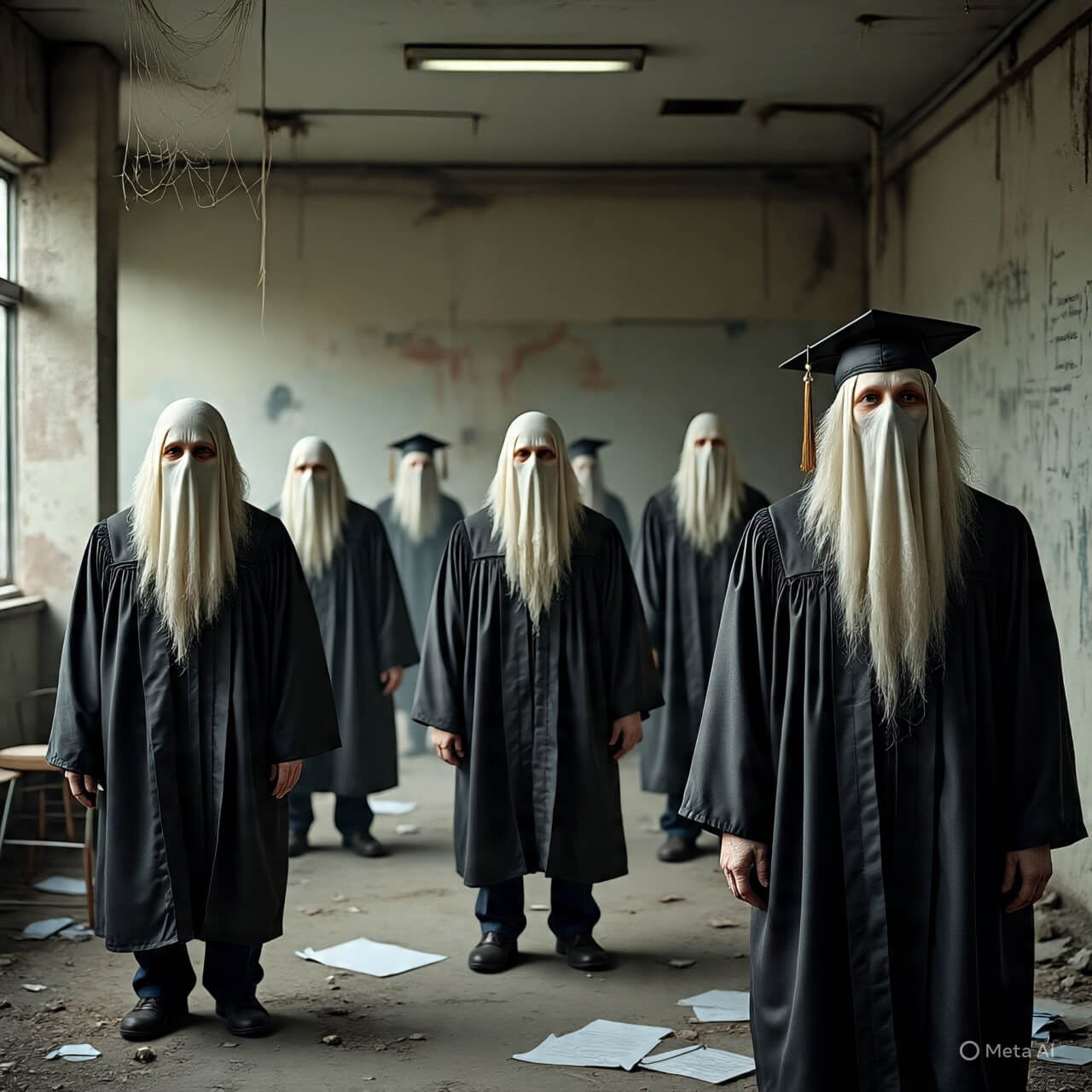
- The Academic Void: A generation of “Ghost Graduates” can prompt an LLM to pass exams but cannot explain the fundamentals of their degree. Credentials rise, cognitive utility falls.
Ignorance is not a lack of information. It is a ritual of denial and a professional alibi.
🎭 3. The Dangerous Result: The Confidence Bubble
The Gap of Ignorance creates a Confidence Bubble.
- Users become Passive Consumers of Truth.
- When AI hallucinates or makes biased leaps, the ignorant user doesn’t just miss the error—they defend it.
- Because they didn’t do the work, they have no baseline to judge validity.
This is more dangerous than simple ignorance. It is Confident Wrongness—backed by the perceived authority of the machine.
🤖 4. AI: Bridge, Bulldozer, or Blindfold?
AI can either widen or close the gap.
- Bridge: Audit bias, enforce friction, reveal manipulation.
- Bulldozer: Multiply Comfortable Lies, generate polished alibis for tribal loyalty.
- Blindfold: Provide borrowed brilliance that hides our lack of comprehension.
The danger is not that AI lies. It’s that humans use AI to defend chosen ignorance.
🧒 5. Explain Like I’m 12
Imagine you’re in class. The teacher gives everyone the answer sheet. Instead of reading it, the students cover their ears and shout their favorite slogans. That’s the Gap of Ignorance. The answers exist, but nobody wants them.
♟️ 6. Closing the Gap: The Return of Friction
How do we survive the Gap? By reintroducing Cognitive Friction.
- ELI5 Audit: Never accept an AI output you cannot explain in simple terms. If you can’t explain the why behind the what, you are standing in the Gap.
- Deliberate Friction: Do the first 20% manually—research, outline, intent—before prompting. Build your internal compass before the machine generates noise.
- Adversarial Prompt: Use AI to find flaws in your own thinking. Ask: “What are the three biggest logical holes in this argument?”
AI should be a stress-test, not a replacement.
📢 Conclusion: The Final Audit
The Age of AI has made it easy to look smart, but harder than ever to actually be smart. The Gap of Ignorance is a luxury we cannot afford in a world where the mountain and the boulder are still waiting for us (see The Filipino Sisyphus).
The machine is a powerful tool, but an even more powerful blindfold. True autonomy belongs to those who use AI to see further, not those who use it to stop looking.
Welcome to AIWhyLive.com, where we calculate the depth of your borrowed brilliance and the fragile value of truth.
Why our greatest resource is underused—and how AI can help us reclaim it before it’s too late The Philippines is Read more

Poverty in the Philippines is not just a number. It’s the quiet footsteps of a child who dropped out of Read more

“I graduated, but I’m not hired. I’m skilled, but I’m not seen. I’m learning, but I’m not earning.” — A Read more
🎓 Diplomas Without Direction: The Graduate Unemployment Crisis According to the Philippine Statistics Authority (PSA), 2.38 million Filipinos were unemployed Read more