Before we cure death, let’s try solving a puzzle a 5th grader can handle
🤯 The $100 Billion Riddle: Drawing a Square with 3 Lines
We’re building Artificial General Intelligence. We’re funding labs to reverse aging. We’re tweeting about solving corruption.
Yet here’s a puzzle that breaks more egos than pencils: Draw a perfect square using only three continuous straight lines.
Try it. You’ve likely failed. We know you did—because this deceptively simple task is a perfect, tiny laboratory for testing one thing: The vast, self-imposed limitations of the human mind.
🧠 The Hubris of the Human Brain
We love to boast about our intellect. We defeated chess champions. We cracked the genome. We’re simulating consciousness.
But then we stumble on a problem so simple that a single line of code could solve it instantly. An issue that requires thinking outside the box—literally.
The Square with 3 Lines riddle isn’t a math problem. It’s a framework problem.
Your brain sees a square and immediately imposes two iron-clad, unspoken rules:
- The lines must be inside the square.
- The lines must be the same length as the sides of the square.
You are your own worst enemy. Your mind, in its arrogance, overcomplicates the instruction, blinding you to the simple solution.
(For those still frustrated: draw three sides of the square, and use the edge of the paper or screen as the fourth.)
🐀 The Rat, the Square, and the Corruption Problem
This tiny failure—the inability to break simple rules—is why we can’t stop bragging about solving corruption.
You, the brilliant human who can’t solve a 3-line puzzle, now want to tackle a problem that is infinitely more complex: The systemic, rule-breaking, greed-driven failure of governance.
The logic is brutally simple:
| Challenge | What It Requires |
|---|---|
| The Puzzle | Breaking a self-imposed, imaginary rule |
| Corruption | Enforcing actual, written rules of law |
If we can’t force our own brains to ignore invisible boundaries on a piece of paper, what makes us think we can force entire political systems to ignore the visible rewards of illicit wealth?
Our collective struggle with the 3-line square is a microcosm of our struggle with corruption: We are too arrogant to see the simple solution because we are too attached to our comfortable, failing frameworks.
🧩 Do We Need AI for This?
Apparently, yes. Because the human brain—especially the adult one—is wired to chase complexity.
We want to solve corruption. We want to prevent aging. We want to defeat death.
But we can’t solve a drawing puzzle that requires spatial reasoning and a little creativity.
This isn’t a dig at intelligence. It’s a reminder: we confuse ambition with ability.
🐀 Forget Immortality. Can We Beat the Rat?
As we argued in Smarter Than AI, Dumber Than Rats, we haven’t even achieved mastery over basic pests.
- Rats adapt.
- Mosquitoes swarm.
- Cockroaches survive.
- Corruption thrives.
We are aiming for AGI (Artificial General Intelligence) while failing at HGE (Human General Execution).
We won’t prevent aging or solve the great problems of the universe until we can collectively achieve two things:
- See the solution to the 3-line square (i.e., think without self-imposed, limiting assumptions).
- Stop rewarding the corruption that requires zero-level intelligence to execute.
🤔 Too Cryptic? Explain Like I’m 12
Imagine someone asks you to draw a square with 3 lines. You draw three sides. Then you use the edge of the paper as the fourth. Boom. Square.
Now imagine someone asks you to fix corruption. You build a big system. But the corrupt person just moves to another department.
Sometimes, the simple solution works. Sometimes, the system is the problem.
📢 Final Thought: Before We Cure Death, Let’s Solve the Square
We’re not mocking ambition. We’re mocking arrogance.
If we can’t beat rats, if we can’t solve a 3-line puzzle, if we can’t stop ghost employees from haunting payrolls—
Then maybe we should stop pretending we’ve mastered intelligence.
Do we need AI to draw a square with three lines? No. We need AI to point and laugh at us until we realize that the biggest barrier to progress isn’t technological— It’s the sheer, frustrating rigidity of the human mind.
Join AIWhyLive.com.. Let’s debug the system—one line at a time.

How to be professionally irresistible without posting, pandering, or pretending to be busy—even in the AI era 🔥 Concept Summary Read more

The AI responded with textbook precision: Evolutionary pressure. Reproductive rates. Biological resilience. It was optimized. It was accurate. It missed Read more
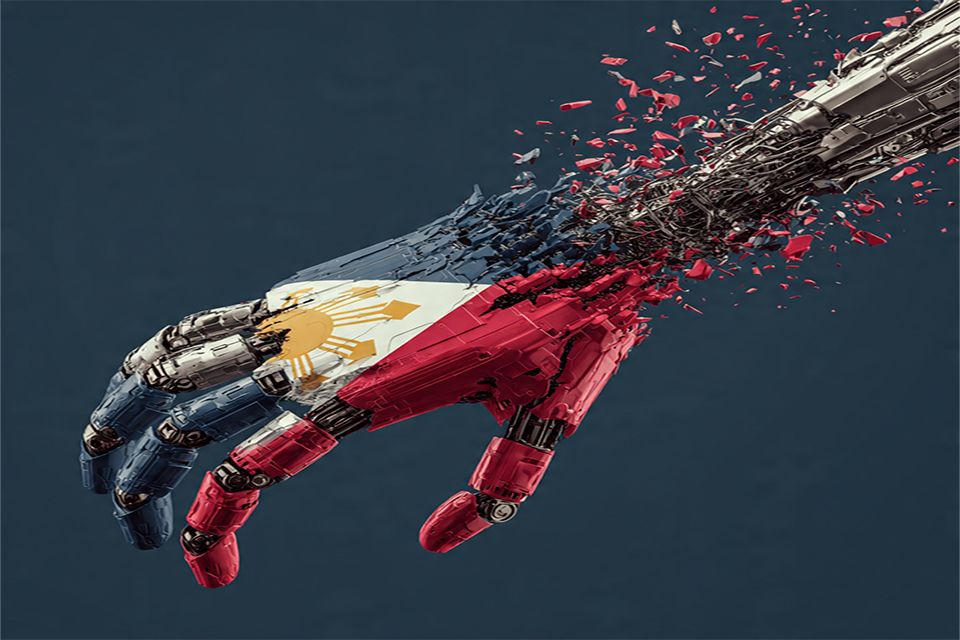
We asked AI one of the most difficult and controversial questions facing the Philippines: Can blockchain technology stop extreme corruption? Read more

Corruption in the Philippines is like traffic on EDSA—everyone hates it, everyone talks about it, but it never seems to Read more